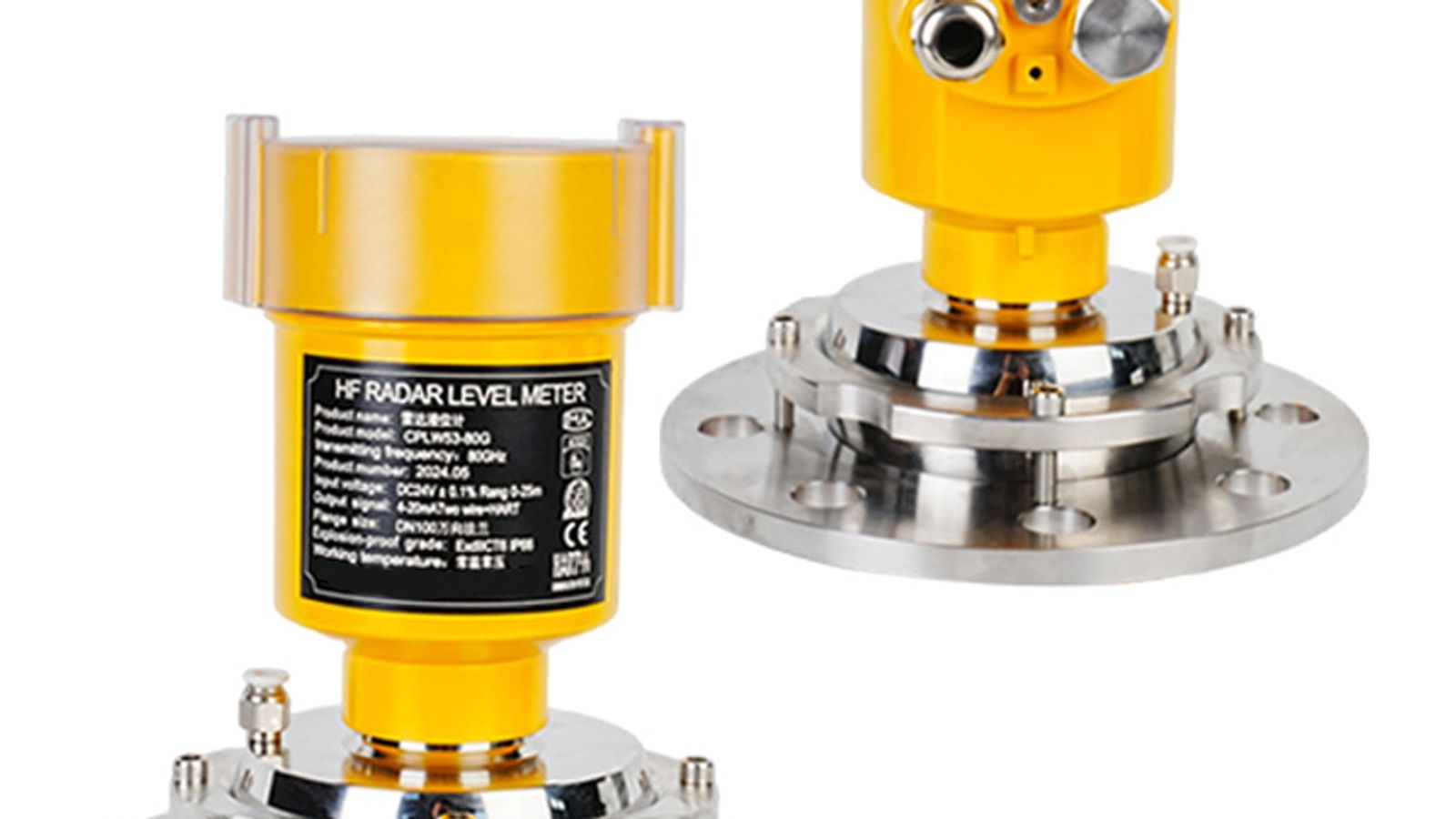
Sourcing level measurement instruments from China has become the default strategy for procurement teams worldwide — and for good reason. China is the world's largest producer of process instrumentation, accounting for roughly one-third of global manufacturing output in the sector, and a typical Chinese factory quotes 30–50% lower than an equivalent European or North American brand for a comparable specification and accuracy. The supply base includes ISO 9001-certified plants, ATEX/IECEx-approved explosion-proof transmitters, and delivery lead times measured in three to six weeks rather than three to six months. The economics are compelling, and the top tier of Chinese manufacturers now competes with established Western brands on performance, not just on price.
But the same market that produces world-class radar and ultrasonic transmitters also hosts thousands of small trading companies that resell instruments they have never opened, tested, or calibrated. For a process plant, a failed level transmitter is not a component failure — it is a tank overflow, a lost batch, a safety incident, or a regulatory finding. The difference between a reliable long-term partner and a costly mistake is rarely visible in a product catalog. It is visible only inside the factory. That is why, before you sign a purchase agreement or a framework contract, you need to look behind the brochure.
This guide walks through nine practical checks you can run — most of them remotely, some in person — to verify that a Chinese supplier is a genuine manufacturer with the engineering depth to back its products. It is the same checklist we apply to our own operation, and you can see how WELK measures up as you read. The nine checks fall into three groups: who you are buying from (checks 1–2), how the product is made and verified (checks 3–6), and how the relationship holds up after delivery (checks 7–9).
The 9 Factory-Audit Checks
1. Legal Entity and Export Experience
Every serious relationship starts with a piece of paper. Ask the supplier for its business license (营业执照), confirm the legal entity name matches the name on the quotation, the invoice, and the bank account, and check that the company holds import-export rights. A genuine manufacturer that has been exporting for a decade will produce this documentation immediately; a one-year-old trading front may fumble, hesitate, or offer a name that does not match across documents.
Ask about export experience directly: how many years have they exported, to which markets, and how many shipments per month? Ask for customs declaration records or export documentation you can spot-check, and for a bank reference or letter-of-credit history. Check the company's registration through the Chinese national enterprise credit system and look at its registration capital, date of establishment, and scope of business — the scope should say manufacturing, not sales or import and export. A supplier that has delivered to regulated industries in Europe or North America for many years will also have documentation in English and will not flinch at your questions. This check alone will not separate a factory from a trader, but it builds the foundation for every check that follows.
2. Manufacturing Capability vs. Trading Company
The single most important question you can ask a Chinese supplier is not "what is your price?" but "may I see your production floor?" A genuine manufacturer has assembly lines, winding and potting stations, PCB assembly and testing benches, machining equipment, and inventory. A trading company has an office, a laptop, and a folder of photos — often the same twenty photos shown to every buyer.
Ask for a live video walkthrough. A real factory will say yes and will let you point the camera anywhere: at the SMT line, at the calibration bench, at the warehouse, at the engineers' desks. A trader will offer a pre-recorded video, a "colleague is busy today" excuse, or a tour of a partner's plant that cannot be named. Ask practical questions only a manufacturer can answer: what is your SMT line capacity? Which of your components are potted in-house? How many production workers versus sales staff? Ask them to power on a radar level meter and show you the echo curve on the screen — that is a five-second demonstration no trader can fake.
A real manufacturer is also happy to show you around in writing. Many publish their facility openly, and you can judge the depth of a plant from the level of detail shown. WELK offers every customer a virtual factory tour, and we encourage you to demand the same from any supplier you are evaluating. If they cannot show you their floor, there is a reason.
3. Quality Management System: Verify the ISO 9001 Certificate
Almost every Chinese supplier claims to be ISO 9001 certified — and a surprising number actually are. The certificate itself proves less than you think, so verify it properly. Ask for the certificate as a PDF (not a photo of a wall plaque), read the scope statement, and check the certifying body. A certificate issued by SGS, TÜV, BSI, DNV, or another internationally recognized body, with a scope that reads "design and manufacture of level instrumentation," is meaningful. A certificate with a scope limited to "sales and after-sales service" is a trading company's certificate — it covers exactly what they do.
Then check the certificate number against the issuing body's public database to confirm it is valid and not expired. Look at the issue and expiry dates, and ask for the most recent surveillance audit report. Beyond the certificate, ask how the quality system actually operates day to day: do they run incoming inspection (IQC) on components, in-process checks (IPQC) during assembly, and outgoing inspection (OQC) before shipping? Ask for the inspection rates — is every instrument checked or a statistical sample? Ask about document control, non-conformance handling, and training records for operators. A plant that treats ISO 9001 as a way of working will answer these questions with specifics and process names; a plant that treats it as a marketing logo will answer with vague generalities.
4. Calibration Equipment and Traceability
Accuracy claims are only as good as the equipment that verifies them. When a supplier quotes ±2 mm accuracy on a radar level meter, ask to see the calibration bench it was verified on. A serious manufacturer owns a calibration tank or range, a certified reference instrument with a current calibration certificate, and ideally a laser-based reference for mounting-height verification. Ask for the calibration equipment list and for the certificates of the reference standards themselves — including the issue and due dates. Traceability should run back through a chain of calibrations to a national standard (such as China's National Institute of Metrology) or an internationally recognized equivalent under ILAC/CNAS accreditation.
Ask whether every unit is calibrated before shipment or only a sample. A manufacturer that calibrates 100% of production — and provides an individual calibration certificate with serial number and measured data in the box — is making a different quality promise from one that calibrates a batch. The same logic applies to environmental claims such as IP68: ask for the IP test report and the test standard, and check whether the test covers the specific enclosure and cable-entry configuration you are buying. For temperature-sensitive applications, ask how temperature compensation is verified. Calibration equipment, test records, and traceability are expensive, and the gap between a real calibration capability and a "calibration certificate" printed from a template is one of the fastest ways to separate a manufacturer from a reseller.
5. Certificates and Compliance: ATEX, IECEx, CE, and More
Compliance certificates protect your plant, your insurance, and your regulatory standing — which is why they must be verified, not admired. If your application is in a potentially explosive atmosphere, ask for the ATEX (European), IECEx (international), or NEPSI (China) certificates for the exact model you intend to buy. Check the certificate number against the issuing body's database — for ATEX, that means the notified body that issued it (such as TÜV, DEKRA, or BSI). Confirm that the certificate holder is the supplier's legal entity, not an unrelated factory whose products they resell, and confirm the certificate covers your exact model and options rather than a family or a single representative variant. Ask for the Declaration of Conformity and read it. If you need functional safety, ask for SIL certificates under IEC 61508 and check the rated safety integrity level. For CE marking, ask for the EMC and LVD evidence. Marine and offshore applications may require CCS, DNV, or other classification approvals.
A supplier that has genuinely gone through type certification will have organized certificates, model numbers that match, and engineers who can explain the scope of each one. WELK publishes its certificates openly for exactly this reason — the documents should survive scrutiny, not avoid it. Remember that certificates describe the product, not the company, so always cross-check the certificate holder name against the legal entity from check 1.
6. In-House Testing and Test Reports
Every instrument that ships should carry its own test report, and you should ask to see a sample before you order. A genuine test report contains a serial number, test date, the equipment used, the measured values, the acceptance criteria, and the signature or stamp of the QC engineer. Ask the supplier to email you three recent test reports — for a radar, a hydrostatic transmitter, and an ultrasonic — and read them like an auditor. Vague reports with "OK" in every field and no numbers are decoration, not evidence.
Ask about test coverage: is functional testing done on 100% of units? Is there a burn-in or aging cycle (老化) before final test — and for how long? Are there environmental test chambers for temperature cycling and humidity, and an IP-rated enclosure test? Ask to see the pressure-test station for hydrostatic transmitters and the insulation test records for loop-powered devices. The presence of in-house test stations, and the willingness to show them and their records on a live call, is one of the strongest signals a factory can send. You can see the same discipline in action on WELK's quality control page, which walks through the inspection points every transmitter passes before it is packed.
7. Customer References and Case Studies
Good manufacturers can name their customers; great ones can show you what they built for them. Ask for two or three references in your own industry — chemical, water and wastewater, oil and gas, food and beverage, mining, or pulp and paper — and ask for contacts you can actually reach. Ask for case studies with verifiable specifics: the end-user or EPC contractor, the project location, the product models and quantities, the year of delivery, and the application (a tank farm with forty radar units running for three years is a different data point from "many satisfied customers around the world").
Treat vague answers as red flags. "We export to Europe and South America" without names, "confidentiality" as a reason to share nothing, and references that are all trading partners rather than end users are all weak signals. Cross-check what you learn with the supplier's stated export experience from check 1 — the case studies and the export story should agree. For the highest-value orders, consider a third-party inspection or a site visit, and ask the supplier to arrange visits to a reference installation if logistics allow.
8. After-Sales Support and Warranty
The purchase price is the beginning of the cost, not the end. Ask for the warranty policy in writing: the duration (one to two years is standard; three years is available from stronger manufacturers), what is covered (repair, replacement, return shipping), and the claim process — how an RMA is raised, who pays freight both ways, and what turnaround time is promised. Ask about spare parts availability: a manufacturer should guarantee spare parts for a defined period, typically five to ten years after a model is discontinued. Ask what happens when an instrument fails in the field: is there remote diagnostics support, a guaranteed response time such as 24 hours for a technical reply, and on-site commissioning or troubleshooting if the problem cannot be resolved remotely?
Then do the arithmetic in total cost of ownership. Over a five-year [TCO] horizon, a difference of a few hundred dollars in purchase price is dwarfed by the cost of an unscheduled tank shutdown, an emergency replacement shipment, and a lost batch. A unit that fails in eighteen months is not cheap; it is expensive in installments. Price the instrument, the support, the spares, and the downtime risk together, and the reliable manufacturer — the one that answers support tickets on the same day and keeps the documentation to prove it — usually wins.
9. Communication and Engineering Support
The last check is the one you will feel every week of the relationship: how well the supplier communicates and how deeply they understand your application. Measure their response time — a serious supplier replies to a technical question within 24 hours on a business day. Measure the quality of the answer, not just its speed: does the engineer ask about your process conditions — pressure, temperature, media, vapor, foam, vessel geometry, nozzle length, mounting position — or do they quote a price from a spec sheet? A supplier that asks probing questions understands that level measurement is application engineering, not catalog sales.
Ask who answers your technical questions: a salesperson who forwards everything to "the factory," or an engineer who can talk about echo loss, dielectric constants, and dead zones? Ask about engineering support before and after the sale: selection and sizing help, installation guidance, commissioning support, custom configurations such as special flanges, threads, cable lengths, and communication protocols. The depth of questions a serious supplier asks is the same depth you should apply on your side — and if you are sourcing hydrostatic transmitters, our hydrostatic level transmitter RFQ checklist is a good model for the specification detail a competent supplier will want from you.
Send Your Specs and Get a Verified Quote
The nine checks above are a filter, not a hurdle. A genuine manufacturer welcomes them because the same transparency that lets you verify their factory is what lets them win your trust. Once you have shortlisted a supplier that passes, the next step is simple: prepare a proper specification and ask for a verified quote.
Before you write the RFQ, make sure you know what you actually need — the measurement technology, the range, the accuracy, the output and protocol, the process connection, and the certifications. If you are unsure whether your application calls for radar, ultrasonic, hydrostatic, or another principle, work through the level selection guide first. Then send your specification to contact WELK, and we will come back with a quotation, the relevant factory-audit documentation, and sample test reports — the same evidence we have described throughout this article. We manufacture radar, ultrasonic, hydrostatic, and capacitance level instruments under one roof, and we are happy to be audited by you, your quality team, or your third-party inspector before you sign.
FAQ
How can I verify that a Chinese supplier is a real factory and not a trading company?
Confirm that the business license address matches the plant address, and demand a live video walkthrough of the production floor — a real factory will point the camera anywhere you ask. Ask to see specific production equipment in operation, request sample test reports with serial numbers, and cross-check that the names on certificates and bank documents match the legal entity. For large orders, arrange a physical visit or a third-party audit by a recognized inspection company such as SGS or TÜV.
Why are Chinese level instrument prices so much lower than Western brands?
Chinese manufacturers benefit from lower labor costs, vertical integration — many build their own sensors, electronics, and housings in-house — and economies of scale that Western plants no longer enjoy. The price gap reflects cost structure, not necessarily quality. The top tier of Chinese manufacturers builds to ISO 9001 and international standards; the risk is not the price but the unverified supplier, which is exactly what the nine checks above are designed to address.
How can I protect my intellectual property when working with a Chinese supplier?
Sign an NDA before sharing detailed drawings, and share only what the quotation requires. Keep proprietary algorithms, calibration data, and sourcing details off the document you send. Specify IP ownership and confidentiality obligations in the contract, and remember that China operates a first-to-file system — if your IP matters in the Chinese market, register the trademark and patent locally. In practice, a reputable manufacturer protects its long-term export reputation and has no interest in copying a customer's design.
What is the minimum order quantity (MOQ)?
For standard catalog models, many Chinese level instrument manufacturers have an MOQ of one to ten units, so sample orders and small-batch projects are common. Custom configurations — special flanges, cable lengths, materials, or protocols — usually carry a higher MOQ, often twenty to fifty units. Clarify the MOQ per model and per custom specification before you negotiate, and be suspicious of suppliers that claim unlimited flexibility at a suspiciously low price.
What are typical delivery lead times?
Standard models typically ship in fifteen to thirty days; custom configurations and larger orders take thirty to forty-five days. Orders that require special certification, such as a new ATEX or IECEx approval, take longer. Remember to add sea freight time — typically thirty to forty-five days to Europe or North America — and insist on a written production schedule with milestones that the supplier commits to, so you can track progress rather than discover delays at the dock.