A well-prepared RFQ (Request for Quotation) is a structured specification document that tells a level instrument supplier exactly what to quote, and the difference between a complete and an incomplete one is measurable. Chinese suppliers who receive RFQs with full process data can return accurate pricing in 24–48 hours, while a one-line inquiry typically needs 5–7 business days of clarification emails and still risks a misquote. WELK's quoting data shows that RFQs covering eight or more of the 15 points below receive first-round pricing accuracy above 90%, versus roughly 60% for inquiries that only name a product family. If you are sourcing from China — where price, lead time, and customization are usually decided in one round of negotiation — a complete RFQ is not paperwork; it is leverage.
This guide walks through the 15 specification points Chinese level instrument suppliers need from you, grouped into four areas: application and process, instrument specification, environment and compliance, and commercial terms. If your project uses a pressure-based method, our dedicated hydrostatic level transmitter RFQ checklist covers that principle in more depth — the 15 points below apply to radar, ultrasonic, magnetic, and switch instruments alike.
Group A: Application & Process
Start with the process, not the product. The four points below describe what is in the tank and how the tank behaves. Chinese suppliers use this data to shortlist suitable instruments before pricing anything, and it is the area where most RFQ gaps hide.
1. Process medium and its properties
Name the medium and its key properties: exact name, density, viscosity, and corrosiveness. Density matters most for hydrostatic and displacer instruments, viscosity affects ultrasonic and float units (thick media damp signals and slow floats), and corrosiveness decides which wetted materials are mandatory. If the medium is a blend or slurry, state the dominant components and approximate ratios. Also say whether it is a liquid, a solid, or a paste — a cement silo needs a completely different instrument from a water tank. For municipal clean water, sewage, and stormwater duties, the Water & Wastewater Level application page lists the typical media and the instrument families commonly paired with them.
2. Operating conditions
State the minimum, normal, and maximum temperature and pressure, and whether the vessel ever operates under vacuum. Chinese suppliers quote standard temperature ranges such as -40~150°C for a reason: beyond that envelope the electronics housing, sealing, and sensor elements all change. Pressure rating is tied to the process connection (point 8), but a vacuum or negative-pressure vessel rules out certain designs and forces strengthened flanges. Give the full operating envelope rather than a single "typical" value — the supplier designs for the worst case, so the worst case must be on the RFQ.
3. Vessel / tank geometry
Describe the tank: horizontal or vertical, open or closed, diameter and straight-side height, and where the instrument will sit. A 2-meter open tank, a 20-meter silo, and a narrow stilling well behave completely differently. Note internal obstructions — agitators, heating coils, ladders — because they create false echoes for radar and shadow zones for ultrasonic. State the nozzle size and height for a top-mounted unit; a small nozzle restricts beam-angled radar antennas. If the instrument mounts on the side wall and you want a local visual readout, magnetic level gauges attach to side nozzles with zero power draw — include the nozzle centers and the distance between the two connections.
4. Measurement range
Give the span between the empty reference and the full level. Suppliers quote in Empty-to-Full terms, so specify the empty reference (often the lower nozzle or tank bottom), the full level, and the exact distance between them. If you only know tank height, say so — but state the usable range, excluding any unusable top or bottom dead zones. A 10-meter tank with a 0.5-meter unusable top has a 9.5-meter usable range, not 10. If the span may change over time (e.g., a tank that will be retrofitted), flag it.
Group B: Instrument Specifications
Once the process is defined, the hardware comes next. These six points fix the instrument's configuration and are what your supplier actually builds the quote around.
5. Measurement principle preference
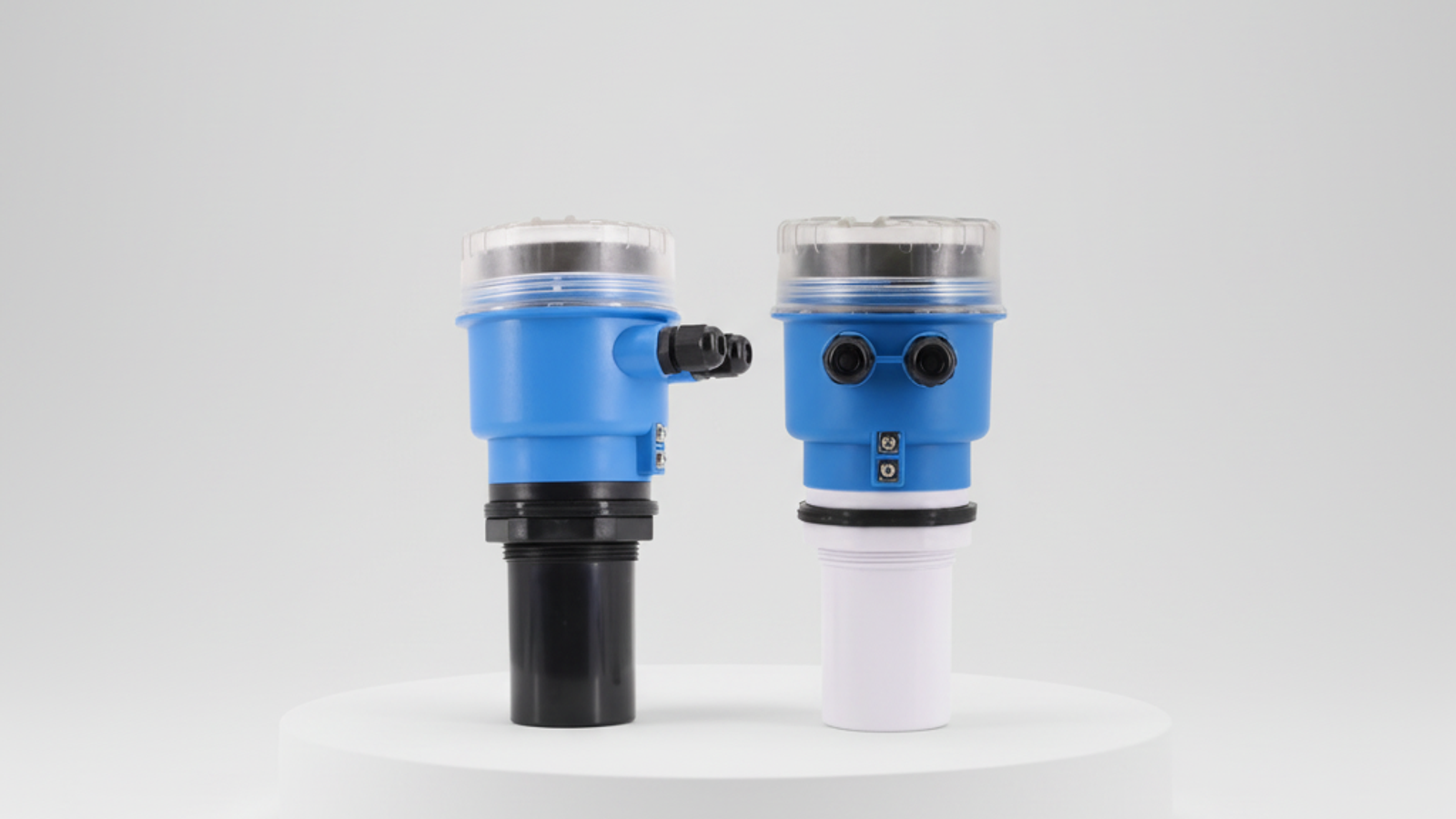
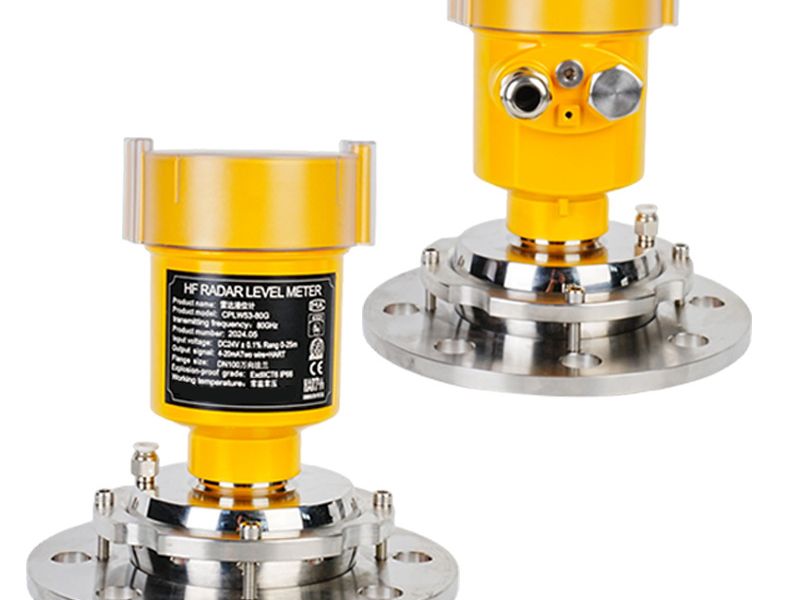
If you already know the technology, state it. If you are open to suggestions, describe the application and let the supplier propose. The main families Chinese suppliers build are radar — the best accuracy (down to ±2mm in guided-wave and high-end free-space units) and the widest tolerance of temperature, pressure, and vapor, see radar level meters — and ultrasonic, which is cost-effective for clean liquids in open or vented tanks but is affected by foam, vapor, and turbulence, see ultrasonic level meters. Hydrostatic units suit open tanks and boreholes but need accurate density. If you cannot decide, leave the principle open and state the requirement; a supplier with full process data will propose the most economical fit.
6. Accuracy requirement
State the accuracy you actually need, as ±mm or ±% of full span (FS). Over-specifying inflates cost; under-specifying invites field problems. A custody-transfer or tight-inventory application might need ±2mm, which points to guided-wave radar; a high/low alarm application is fine with a switch. Be explicit about which you mean — ±5mm of measured distance and ±0.5% FS are different specifications and are priced differently. Add repeatability if consistency matters more to you than absolute accuracy.
7. Output signal
Specify the electrical output the control system expects: 4-20mA analog, 4-20mA with HART digital overlay, RS-485 Modbus RTU, or a simple switch contact. Chinese suppliers support most of these, but the transmitter board, wiring, and cable entry differ, and quoting needs the exact choice. If you need both, write "4-20mA HART" and name the protocol. If you only need alarms, name the switching output and look at dedicated level switches instead of a full transmitter — simpler and cheaper for that job.
8. Process connection
One of the most commonly missing items. Specify the connection type and size: flange (DN50/DN80/DN100 or ANSI 2"/3"/4", with the standard and pressure class — GB, DIN, ANSI, PN10/PN16/Class 150), thread (G1½", 1½" NPT, M20×1.5), or sanitary clamp for food and pharma. State whether the sensor needs a bracket, nipple, or welded adapter. A wrong connection alone can add a day of lead time and a material price delta, so be exact.
9. Wetted materials
List the materials that may contact the medium — the wetted parts — and any you forbid. Common options are 316L stainless steel, PTFE-lined wetted parts for aggressive chemicals, PP/PVDF for corrosive media, and various elastomer seals. If the medium is corrosive or hygiene-rated, the material choice is non-negotiable and must be verified. If you leave this blank, the supplier quotes the default (usually 316L), which may or may not suit your process — and a compatibility failure in service is far costlier than a specification sentence on the RFQ.
10. Power supply
State whether the instrument is two-wire (loop-powered, typically 24V DC over the 4-20mA loop) or four-wire (separate supply, 220V AC or 24V DC). This decides the electronics and terminal configuration. If you are replacing an existing unit, state the existing wiring arrangement — two-wire versus four-wire mismatch is a frequent source of field rework. Give the available voltage range (for example 12–36V DC) and the local mains standard (110V or 220V AC) where relevant.
Group C: Environment & Compliance
Environment and compliance determine whether the instrument can legally and safely operate at your site — and they change both design and price.
11. Hazardous area
If the site can contain explosive atmospheres, state the zone classification: gas zones ATEX Zone 0, 1, or 2, or dust zones Zone 20, 21, or 22, plus the temperature class (T3, T4, T5, T6). Chinese suppliers routinely build explosion-proof instruments certified to ATEX, IECEx, and NEPSI. The protection concept matters: intrinsically safe (Ex ia) and flameproof (Ex d) are different designs with different certification paperwork. When in doubt, name the zone and the gas or dust (hydrogen, methane, coal dust, and so on) and let the supplier propose the protection mode.
12. Ingress protection
State the required IP rating. Indoor control rooms typically need IP65; outdoor installations exposed to rain and washdown usually require IP67; submersible or flood-prone locations demand IP68. If the transmitter sits in a pit that can fill with water, say so. IP68 is not just a cover rating — it drives the cable gland, housing sealing, and component costs, so it belongs on the RFQ rather than being discovered during installation.
13. Certificates required
List the certificates and documents the project must receive: material certificates (for example EN 10204 3.1 for wetted parts), calibration certificates with test data, SIL ratings for safety-instrumented functions, and any third-party inspection or explosion-proof certificates. Chinese suppliers keep standard certificates on file, but project-specific documentation can extend lead time and price. Mentioning it in the RFQ avoids an unwelcome surprise after ordering.
Group D: Commercial Terms
Commercial terms are often treated as a formality, yet they are where most quote revisions happen. Two points complete the picture.
14. Quantity and MOQ
State the total quantity, the lot size, and expected annual consumption. Chinese suppliers price in volume tiers: a one-off 10-unit order prices very differently from a 500-unit annual program. If you plan repeat orders, say so — it justifies tooling and earns better pricing. State your MOQ expectation if you have one; customized instruments (special flanges, coatings, custom ranges) often carry a minimum batch size.
15. Delivery and logistics
Specify the target lead time, destination port or address, and the Incoterms you expect (EXW, FOB, CIF, or DDP). Delivery affects both price and scheduling — air freight is faster and far more expensive, sea freight is economical and slow. Give the required-by date, any quantity split across delivery windows, and documentation needs (commercial invoice, packing list, certificate of origin, export license). If the project has a hard commissioning date, state it so the supplier can reserve a production slot.
Send WELK Your Complete Specification
A complete RFQ is the fastest route to an accurate price. If you have the 15 points above — or even ten of them — send your specification sheet to WELK. Our engineers review each RFQ against the process data, propose the most economical instrument fit, and return a quotation with lead time and delivery terms. For complete RFQs, the first quote typically goes out within 24–48 hours.
Contact WELK with your medium, range, connection, and output at minimum — we will handle the rest.
FAQ
The process medium and its properties. Everything else — range, wetted materials, connection — follows from what is in the tank. A supplier who knows the medium can shortlist instruments, propose the correct materials, and price the right configuration on the first pass.
I don't know which measurement principle to use. Can I still send an RFQ?
Yes. Describe the application — medium, tank, temperature, accuracy — and leave the principle open. A competent supplier will recommend between radar, ultrasonic, hydrostatic, magnetic, and switch instruments based on your process data. That is exactly what the application-and-process points in this checklist are for.
How long does a quote from WELK take?
For RFQs with complete specification data, typically 24–48 hours. Incomplete RFQs need clarification rounds and can stretch to several days. The more complete the RFQ, the faster the quote.
Can I just send a model number instead of a full RFQ?
Sometimes. If you are replacing an existing WELK instrument and the nameplate is readable, a model number plus a photo may be enough. But many models ship in variants with different connections, materials, and outputs, so a model number alone is ambiguous. Confirm the range, connection, and output even when you have a model number.
How do I compare quotes from different suppliers?
Compare the specification sheet, not just the price. Verify that each quote matches the same range, connection, wetted materials, output, and certificates. Ask for lead time and Incoterms in writing, and clarify what is excluded — calibration certificates, explosion-proof certification, and shipping are common omissions. A cheap quote that misses a mandatory certificate is not cheap.
正文约 2200 词。7 处内链各用一次(hydrostatic 在开头、Water & Wastewater 在要点 1、magnetic 在要点 3、radar/ultrasonic 在要点 5、level switches 在要点 7、contact 在文末 CTA)。description 为 157 字符,含行动号召。无图片,纯 markdown。