Importing level transmitters from China is a repeatable but documentation-heavy process that typically runs 60 to 90 days end to end: you define your measurement principle, compare quotations, agree Incoterms and payment terms, wait through production, verify quality before shipment, and release the balance only after the instruments pass inspection. A level transmitter is a process instrument that converts the level of a liquid, slurry, or bulk solid into a continuous electronic signal — normally 4–20 mA with HART, Modbus, or a fieldbus protocol — and it falls under HS code 9026.10, the international tariff heading for instruments that measure or check the flow or level of liquids. For procurement managers, the practical rule is simple: surprises should be resolved at the specification and contract stage, not at the port. This guide walks through the entire import pipeline — Incoterms, payment, inspection, packing, shipping, and customs — with the numbers you need to budget time and money accurately.
The Full Import Process: From Inquiry to Customs Clearance
The sequence below is what a well-run order with a Chinese level instrument manufacturer looks like. Each step has a realistic duration so you can plan backwards from your installation date.
- Inquiry and specification. Send a detailed RFQ covering measurement range, process connection, output signal, power supply, hazardous-area requirement, and medium. Response time from a serious supplier is 24–48 hours. Use a structured RFQ to avoid quoting mistakes: our level instrument RFQ checklist lists the fifteen points that matter most.
- Quotation and negotiation. Expect a formal quotation within 1–3 days covering unit price, MOQ, lead time, packing, and the Incoterm. Compare at least two or three manufacturers on total landed cost, not unit price alone.
- Sample approval (optional but recommended). For custom configurations or first-time suppliers, a pre-production sample costs a few hundred dollars and compresses the risk of a wrong specification. OEM buyers often combine samples with an OEM level instrument configuration package to lock down labeling, calibration range, and cable length before mass production.
- Proforma invoice (PI) and deposit. The supplier issues a PI, you pay the deposit — normally 30% under T/T. This is the point of no return, so the PI must state Incoterms, unit prices, lead time, and HS code in writing.
- Production. Standard models run 15–45 days depending on type and quantity. Radar transmitters with certified housings tend to sit at the longer end; simple level switches can ship in two to three weeks.
- QC inspection. Either factory test reports alone, or a third-party inspection with SGS/BV before shipment. If you pay the balance against documents, this is where you protect yourself.
- Packing and booking. Export cartons, wooden cases, and a freight booking to your port. The supplier should send packing photos or a pre-shipment video.
- Shipment and customs clearance. Sea freight takes 25–40 days to Europe or the US; air freight takes 5–10 days. Your customs broker clears the consignment using the supplier's commercial invoice, packing list, bill of lading, and certificate of origin.
Total procurement time for a typical order is roughly 45–70 days from PI to arrival at a European or North American port — 15–45 days production plus 25–40 days sea freight, with a small buffer for inspection and booking.
Incoterms 2020 for Level Transmitters: Who Pays What
Incoterms 2020 defines where cost and risk transfer between buyer and seller. For level transmitters shipped out of China, you will most often meet four terms.
EXW (Ex Works). The seller makes the goods available at their factory; you arrange everything — domestic haulage, export customs, freight, insurance, and import clearance. It gives the lowest unit price but the most responsibility, and it is the least common choice for overseas buyers because the supplier's cooperation on paperwork is still required.
FOB (Free On Board). The seller delivers the goods on board the vessel at the named port of shipment and clears export customs. Cost and risk transfer to you once the goods are on the ship. This is the most widely quoted Chinese export term, and most suppliers are comfortable with it because export clearance is already their routine.
CIF (Cost, Insurance and Freight). The seller pays for freight and marine insurance to the destination port. Risk still transfers at the port of shipment, but the seller handles two things you would otherwise coordinate. CIF is popular for smaller consignments because it bundles shipping into the unit price.
DDP (Delivered Duty Paid). The seller bears every cost and risk — including import duty and clearance — until the goods are delivered at your door. It is the lowest-effort term for you, but suppliers price DDP conservatively and some are reluctant to offer it on electronics because of liability exposure. When a supplier does offer DDP, confirm exactly which charges are included; ambiguous DDP quotes are a common source of final-invoice surprises.
A practical recommendation: use FOB for your first order, when you want full control and can choose your own forwarder; switch to CIF or DDP for repeat orders once you trust the supplier's shipping discipline. Whatever term you choose, put it verbatim on the PI — "FOB Shanghai" or "DDP London" — and make sure your freight forwarder and the supplier agree on the same port.
Payment Terms: T/T 30/70, L/C at Sight, and Escrow
Payment terms are the negotiation where imported instruments are won or lost. Know what is normal before you ask.
T/T (telegraphic transfer) 30/70. The standard for first orders in the Chinese instrument industry: 30% deposit to confirm production, 70% balance before shipment. You pay the balance against the supplier's copy of the packing list, B/L, and inspection documents. Once you have a working relationship, many manufacturers move to 30% deposit and 70% against B/L copy, or even 50/50 for repeat orders.
Letter of Credit (L/C) at sight. A bank-backed instrument where payment releases against presented documents. It protects both sides and is the norm for large-value orders (USD 50,000 and up) and government tenders. The cost is bank fees and document rigidity — one typo in the B/L can delay settlement — so it is overkill for small trial quantities.
Trade assurance / escrow. Platform-based protection (platform trade-assurance protection is the most common) holds funds until you confirm receipt. It suits low-value first orders under roughly USD 5,000. It does not verify product quality — only that something was delivered — so treat it as payment protection, not QC.
For a first order of 1–5 pieces, expect the supplier to ask for 100% in advance, T/T 30/70, or payment through a trade-assurance escrow. Anything over a few thousand dollars should comfortably land at T/T 30/70. Red flag: a supplier that demands 100% upfront on a standard-model order, or that insists on a non-bank payment channel, is one to walk away from — cross-check the company before you commit anything using our guide on how to choose a reliable level measurement instruments supplier in China.
MOQ and Lead Times by Product Type
Minimum order quantities in the Chinese level instrument market are far smaller than buyers expect. For standard catalog models, MOQ is typically 1–5 pieces, and many manufacturers sell single units at a small unit-price premium. The table below summarizes typical figures; check the linked product pages for current configurations.
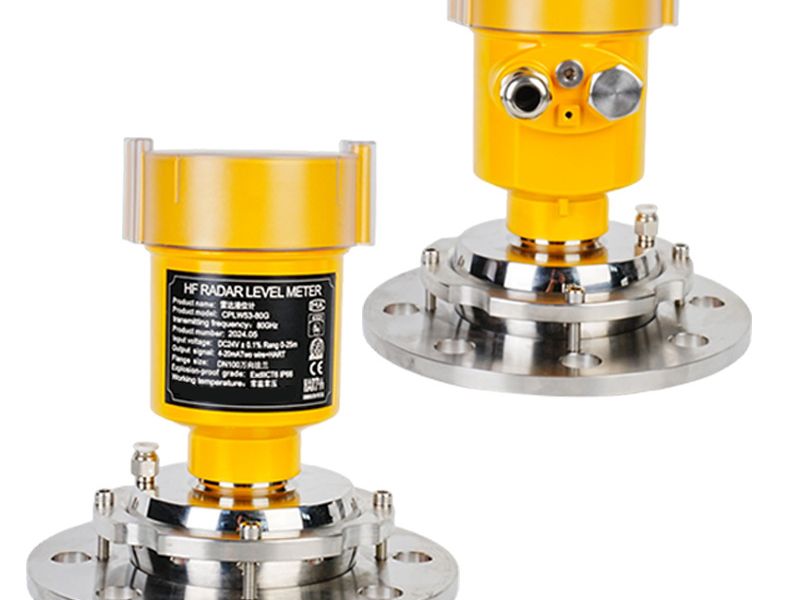
- Radar level meters — MOQ 1–2 pcs for standard models; production lead time 20–45 days because of the 80 GHz antenna assembly and optional ATEX/IECEx-certified housings. The 80 GHz radar level meter is the workhorse for solids and long-range liquid duties.
- Ultrasonic level transmitters — MOQ 1–5 pcs; lead time 15–30 days. Simpler internal construction, faster to assemble and test.
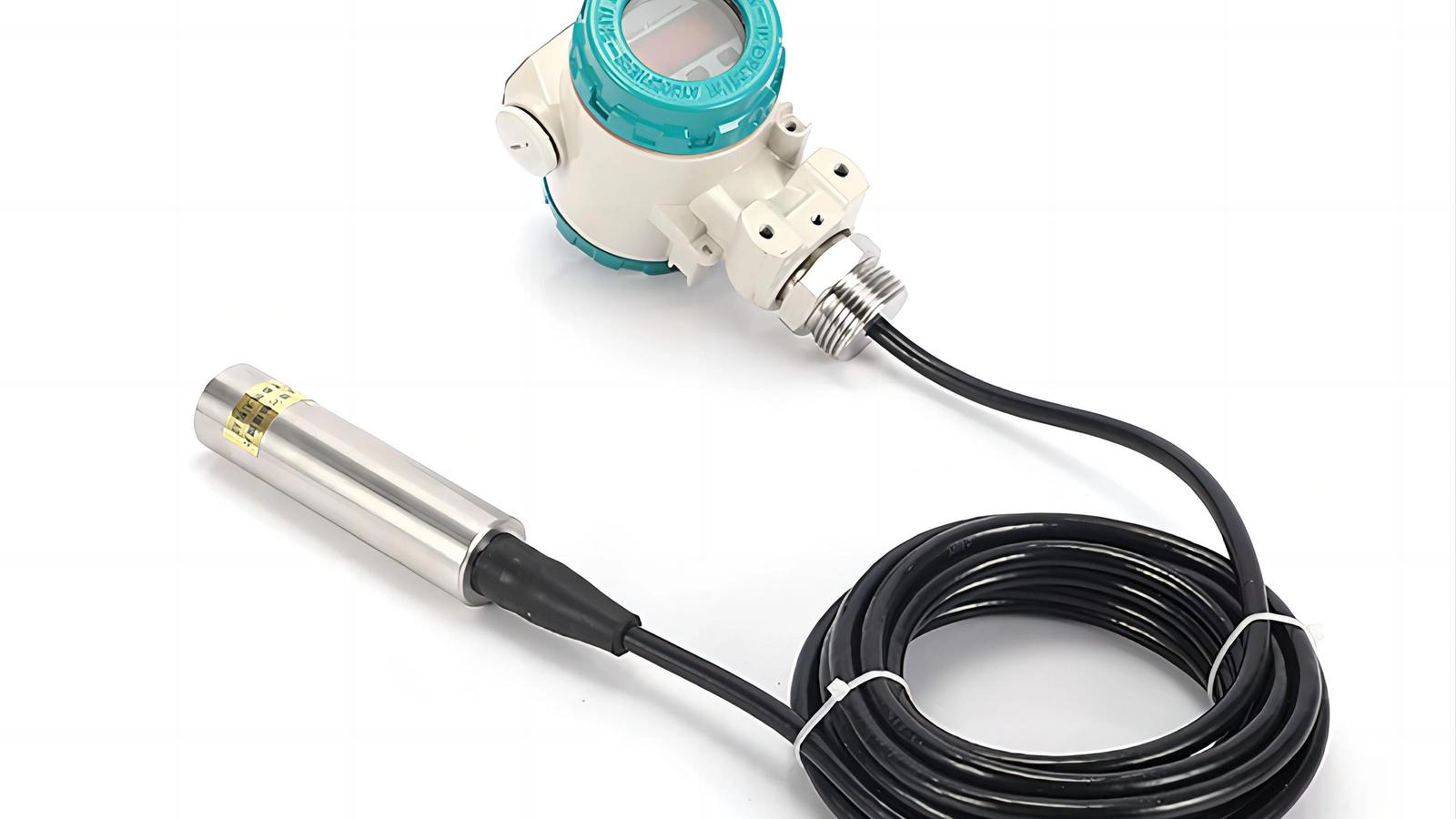
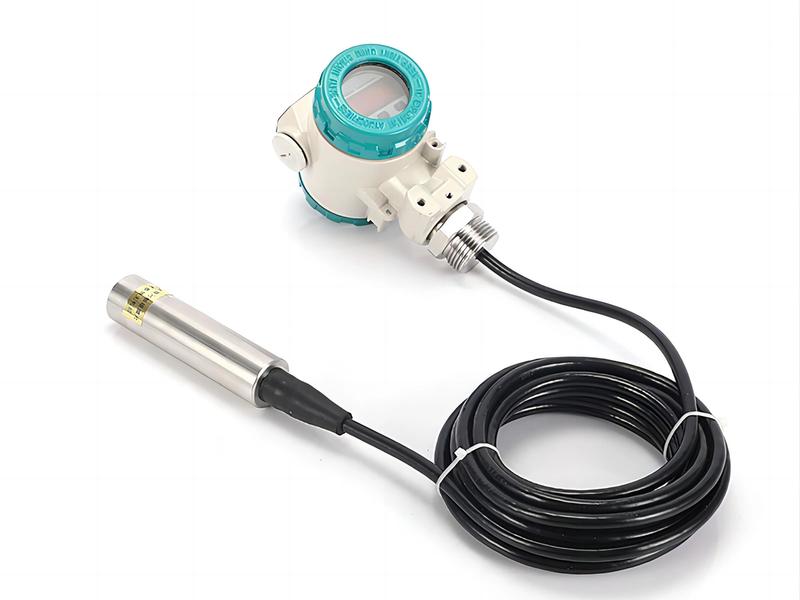
- Hydrostatic (submersible) level transmitters — MOQ 1–5 pcs; lead time 15–30 days. Cable length and material of the diaphragm (316L stainless or ceramic) are the main customization variables.
- Magnetic level gauges — MOQ 1 pcs; lead time 20–45 days, longer for flanged lengths over 3 meters because the measuring tube is custom-cut to your tank height.
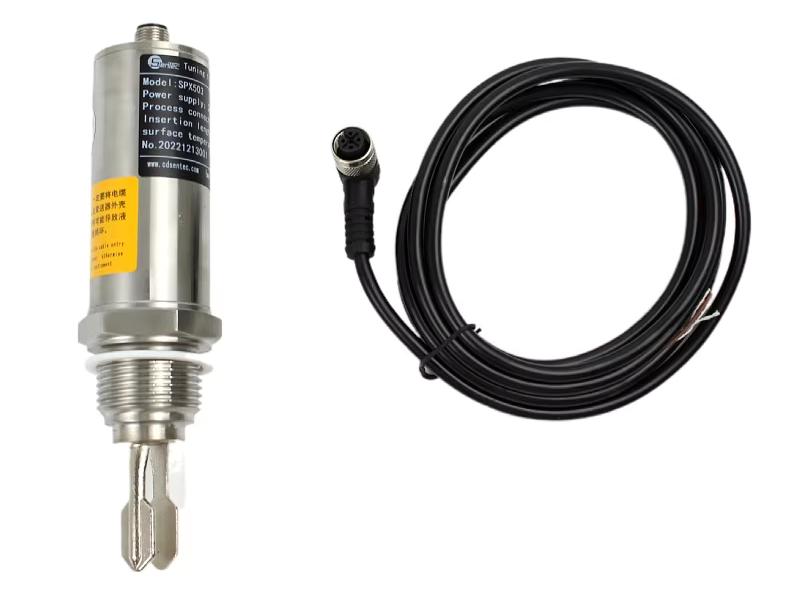
- Level switches (tuning fork, vibrating rod) — MOQ 5–20 pcs; lead time 15–20 days. The most standardized product line and therefore the fastest.
Custom work — special flanges, exotic wetted materials, private labeling, custom calibration ranges — pushes MOQ up to 10–50 pcs and lead time to 30–60 days. If you are standardizing a spec across several plants, ordering a single batch of one configuration is cheaper than ordering the same total volume across five variations.
QC Inspection: What to Check Before You Release the Balance
The balance payment is your only real leverage, and pre-shipment inspection is how you spend it wisely. Chinese instrument factories routinely issue a factory test certificate with each shipment; the question is whether you trust it alone or want a third party to witness the tests.
Third-party inspection with SGS/BV/Intertek costs roughly USD 150–400 for a typical small consignment, and it is the single cheapest insurance in the entire import process. The inspector visits the factory, witnesses testing, checks batch numbers, and issues a report that travels with the shipping documents.
What the inspection should verify, whatever the inspection level:
- Calibration and accuracy test. The transmitter's reading must be verified against a reference standard across the full range, and the calibration certificate should state traceability to a national or international standard (such as CNAS-accredited equipment in China). A calibration certificate without traceability is a decoration, not evidence.
- Output signal check. Confirm the 4–20 mA loop (or HART/Modbus) responds correctly at 0%, 50%, and 100% of range. Loop accuracy is where cheap electronics fail.
- 24-hour burn-in. Power the instrument continuously for 24 hours and re-verify the output. This catches component drift and soldering defects that pass a 10-minute bench test.
- IP rating check. Confirm the enclosure rating you specified — IP65, IP66, IP67 — especially for outdoor and wash-down installations. This is frequently overstated on datasheets; the inspection confirms the gasket and cable gland actually meet it.
- Physical and marking check. Model number, tag number, nameplate data, serial numbers, and welding/process connection quality.
WELK's quality control process documents each test stage, and our factory test records are available on request. If you want the extra assurance of an independent witness, we coordinate SGS/BV inspections before the goods leave the plant.
Packing and Shipping: Cartons, Wooden Cases, LCL and FCL
Process instruments survive international shipping only if packing matches the mode of transport. Standard practice for level transmitters:
- Export cartons with foam inserts for smaller instruments, 5-ply or heavier corrugated board, with fragile and "this side up" marks.
- Wooden cases for long magnetic level gauges (over 1.5 meters), heavy flanged instruments, and any air-freighted consignment. Cases must be ISPM-15 heat-treated and stamped — without the mark, your destination country can reject or fumigate the shipment at your cost.
- Desiccant and export-grade stretch wrap for sea freight, where containers can sit in tropical ports for weeks.
Shipping mode is a cost-versus-speed decision. Sea freight takes 25–40 days to Europe or the US and is the default for everything except urgent spares; a consolidated LCL (less-than-container-load) shipment lets you share a container and pay only for the space your instruments occupy, which suits MOQ-level orders of 1–20 instruments. FCL (full container load) becomes economical once your order occupies roughly half a 20-foot container or more. Air freight runs 5–10 days door-to-door and is 4–8 times the sea cost, justified only for emergency replacements and high-value per-kg cargo. Express courier (DHL/FedEx/UPS) is best for single sample instruments.
Your freight forwarder's job is to book the vessel or flight, consolidate LCL cargo, arrange export haulage if you bought EXW, and coordinate with the supplier's warehouse. Introduce your forwarder to the supplier early — a 15-minute phone call between them before the goods are packed prevents most documentation mismatches.
Customs Clearance and Import Documents
The document set for a level transmitter import is small but must be internally consistent — every figure on the invoice, packing list, and bill of lading should match exactly, or customs and banks will flag the discrepancy.
- Commercial invoice — unit prices, total value, Incoterms, HS code, and the exporter's details.
- Packing list — carton-by-carton contents, net and gross weights, and case dimensions. This is the document customs uses to inspect and the one most often sloppy on smaller shipments.
- Bill of lading (sea) or air waybill (air) — the transport contract and your proof of title until delivery.
- Certificate of origin (COO) — often needed for preferential duty treatment; ask the supplier for it at PI stage, as it must be issued before shipment.
- HS code 9026.10 — "instruments and apparatus for measuring or checking the flow or level of liquids." This is the correct heading for level transmitters. Import duty rates vary by country — the EU and US both typically apply low single-digit rates for this heading, but confirm the current rate for your country before you budget, because classification differences (e.g., a level switch classified as a switch rather than a measuring instrument) can change the rate.
- CE declaration and ATEX documentation — for EU import, the transmitter must carry a CE declaration of conformity and, where it is an explosion-protected instrument, ATEX documentation covering the zone and gas group. IECEx certificates are widely accepted in non-EU markets.
- FCC documentation — for the US, radar transmitters with radio modules (80 GHz radar) fall under FCC Part 15 or Part 87 requirements; confirm the supplier can provide the FCC ID and test report before you commit.
A licensed customs broker in your country handles clearance and pays duty on your behalf. Provide the broker the full document set at least two working days before the vessel arrives; late document submission is the main cause of demurrage and detention fees.
Red Flags and Pitfalls When Buying from China
- Fake calibration certificates. A certificate that names no traceable standard, no equipment serial number, no operator, and no date is fabricated. Ask for the calibration record backing the certificate; a real factory can produce it in minutes.
- Copycat brands and clones. Well-known western brands are widely counterfeited in China, including on platforms with "verified" badges. A genuine brand buy from an unauthorized reseller will fail calibration and lose your warranty.
- Counterfeit datasheets. Some sellers take a genuine datasheet and change the company name. Compare the datasheet's technical specs to what the test report actually shows — an 80 GHz radar "with a 120 m range" that cannot hold accuracy beyond 20 m on the test bench is a red flag.
- Sample-to-batch drift. The perfect sample that ships with lower-grade components in mass production. This is why the pre-shipment inspection checks batch serial numbers, and why buying from the factory that actually makes the instrument — not a trading company — matters. The right supplier has its own factory with the test rigs to back its claims.
- Downstream process flange surprise. Level instruments live or die on their process connection; if the spec changes silently from 1.5" to 2" or the flange rating drops, the instrument will not fit your tank nozzle. Lock the connection on the PI.
- "DDP included" without a breakdown. DDP quotes that cannot itemize freight, insurance, and duty are usually underestimating — and the shortfall arrives as a surprise invoice at your door.
Before wiring a deposit to any new vendor, run the company check in our guide to how to choose a reliable level instruments supplier in China.
Import Checklist: Before You Order, Before You Ship, Before You Clear
| Stage | Checklist item |
|---|
| Before ordering | Confirm measurement principle; range; process connection; output signal; power supply; hazardous-area class; and medium on a written RFQ |
| Before ordering | Compare 2–3 quotations on landed cost; not unit price; check MOQ and lead time in writing |
| Contract | PI states Incoterms (EXW/FOB/CIF/DDP); unit prices; MOQ; lead time; HS code; and calibration range |
| Contract | Agree payment: T/T 30/70; L/C at sight; or escrow; never pay 100% upfront for standard models |
| Production | Request progress photos or a pre-production sample for custom configurations |
| QC | Book SGS/BV inspection (or factory test records) covering accuracy; 4–20 mA output; 24-h burn-in; IP rating |
| QC | Calibration certificate states traceability to a national/international standard |
| Packing | ISPM-15 stamp on any wooden cases; export cartons with foam and markings |
| Shipping | Provide freight forwarder contact to supplier before goods are packed; confirm sea (25–40 days) vs air |
| Documents | Commercial invoice; packing list; B/L; COO; HS 9026.10; CE/ATEX (EU) or FCC (US radar) in the broker's hands 2+ days before arrival |
FAQ
- What is the minimum order quantity for level transmitters from China? For standard catalog models, MOQ is typically 1–5 pieces. Single units are usually available at a small premium; custom or OEM configurations push MOQ to 10–50 pieces.
- How long does production and shipping take? Production runs 15–45 days depending on product type and quantity, then 25–40 days by sea to Europe or the US, or 5–10 days by air.
- Should I pay with T/T or an L/C for a first order? For first orders of a few thousand dollars, T/T 30/70 (30% deposit, 70% before shipment) or trade-assurance escrow is normal. Use an L/C at sight only for large-value orders where bank protection justifies the fees.
- Is third-party inspection worth the cost? Yes. An SGS/BV inspection costing roughly USD 150–400 covers accuracy, output signal, burn-in, and IP rating checks that protect your balance payment — the cheapest insurance in the process.
- What HS code do level transmitters use? HS code 9026.10 covers instruments for measuring or checking the flow or level of liquids. Duty rates vary by country, so confirm the current rate before budgeting.
- Do I need CE or ATEX documentation? In the EU, yes — a CE declaration of conformity, plus ATEX documentation for explosion-protected instruments. In the US, radar transmitters with radio modules need FCC documentation.
Get a Quotation from WELK
WELK is an ISO 9001 factory in China manufacturing radar, ultrasonic, hydrostatic, and magnetic level instruments, with ATEX/IECEx options available on request. We quote with clear Incoterms, publish MOQs and lead times in writing, provide calibration certificates with traceable test records, and coordinate SGS/BV pre-shipment inspection for buyers who want independent verification. Send us your RFQ with your measurement range, process connection, and output signal, and we will return a quotation with total landed-cost options — FOB, CIF, or DDP — within 48 hours. Contact WELK today for a quotation.