Technical
Interface Level Measurement: Oil-Water and Chemical Interfaces
Compare interface level measurement methods for oil-water and chemical tanks, and request a quote with your liquid densities and tank height.
Compare interface level measurement methods for oil-water and chemical tanks, and request a quote with your liquid densities and tank height.
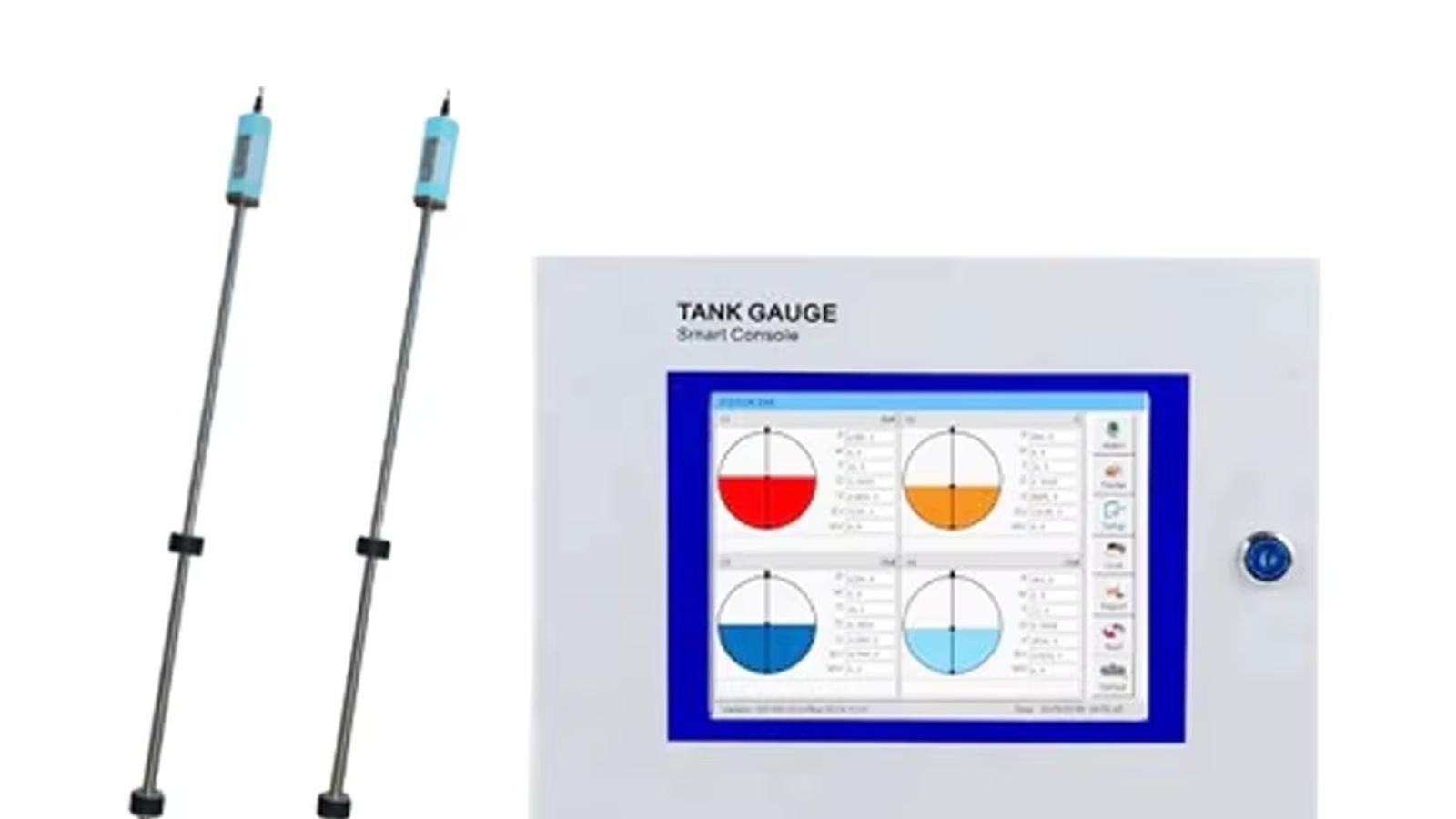
Interface level measurement is the measurement of the boundary between two immiscible liquids inside the same vessel, such as the oil-water interface in a production separator or the boundary between a product layer and an aqueous phase in a chemical tank. The most widely used industrial method is a magnetostrictive interface transmitter with dual floats, which detects the interface by density difference: a level float rides on the top surface of the upper liquid while an interface float, engineered with a density between the two liquids, sinks through the upper phase and settles on the boundary. This approach typically delivers interface accuracy of ±1-2 mm, works reliably when the density difference between the two liquids is at least about 50 kg/m³, and covers tanks up to roughly 20 m in height, making it the default solution for oil-water separators, fuel-water settling tanks, and chemical interface duty.
When two liquids with different densities are stored or processed in the same vessel, they separate into two distinct layers, with the lighter liquid on top. The plane where the two layers meet is called the interface.
A complete picture of a two-liquid tank needs two measurements:
The two readings are independent. In an oil-water separator, the oil surface may stay stable while the water leg drains and the interface rises or falls. Operators who know only the total level have no idea how much water has accumulated, how close it is to overflowing into the oil outlet, or whether the separation section is working at all.
Interface measurement matters wherever two liquids are deliberately separated, blended, or drawn off:
Because both liquids sit in the same vessel, the measuring technique must tell them apart — by density, dielectric constant, or another physical property — rather than simply sensing "liquid present."
A conventional level transmitter answers one question: how much liquid is in the tank. For two-liquid service, that answer is dangerously incomplete.
Consider a desalter or wash tank. The total level reads comfortably in the middle of the operating range while the interface sits only centimeters above the water draw-off line. The next time the water valve opens, the operator pulls product instead of water — a carryover event that can contaminate a finished batch, foul downstream equipment, or trigger a product-quality rejection. The reverse is equally costly: a separator that keeps the interface too low can drag water into the oil outlet, producing off-spec oil and wasting downstream capacity.
Interface level is also a process variable, not just a safety reading. In continuous separation, the interface position controls residence time, coalescing efficiency, and the quality of both draw streams. Many plants control the interface automatically: the interface transmitter feeds a control valve on the water or bottom draw to hold the boundary at setpoint. Without a real interface measurement, that loop has no input, and operators fall back to manual dip sampling.
Finally, a single level reading cannot detect an interface at all. A surface float, a radar on top, or a pressure cell at the bottom all respond to total level; none of them can tell you where oil ends and water begins. Interface duty requires a dedicated technique.
Five methods dominate industrial interface measurement. They differ in how they separate the two liquids, how accurately they locate the boundary, and where each one fails.
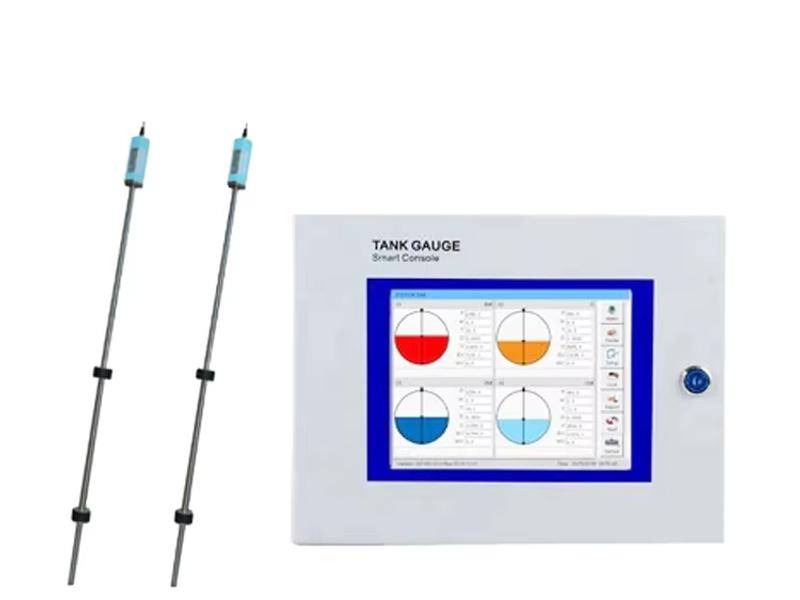
The magnetostrictive interface transmitter is the workhorse of interface measurement. It uses the buoyancy (Archimedes) principle with two permanent-magnet floats on a single magnetostrictive waveguide:
A current pulse travels down the waveguide; the magnetic field of each float generates a torsional return pulse, and the instrument computes both float positions from the time of flight. The result is a direct, independent measurement of total level and interface level in one device, with no moving parts in contact with the process apart from the floats.
Typical performance is interface accuracy of ±1-2 mm, sub-millimeter repeatability, and probe lengths for tanks up to about 20 m. The main requirement is density difference: the interface float needs at least roughly 50 kg/m³ between the two liquids so it can be sized to sink in one and float in the other. WELK's magnetostrictive interface level transmitter is built for exactly this duty.
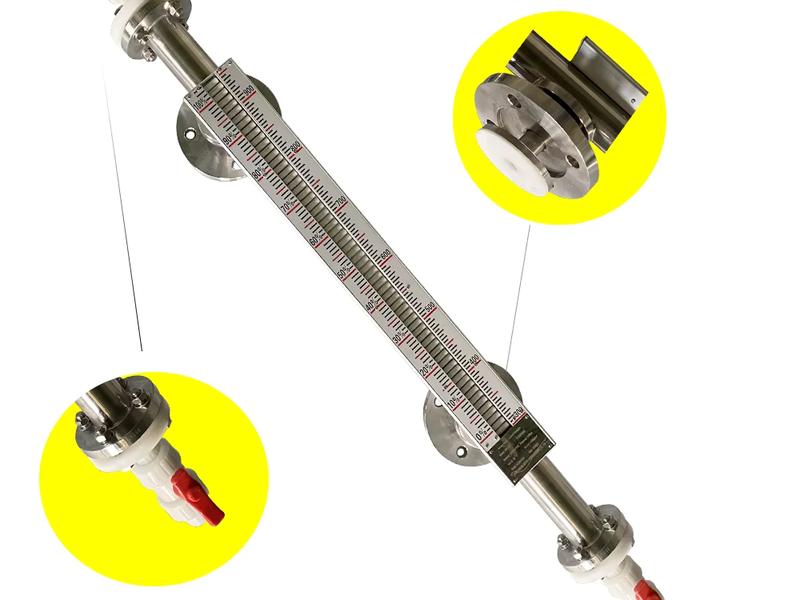
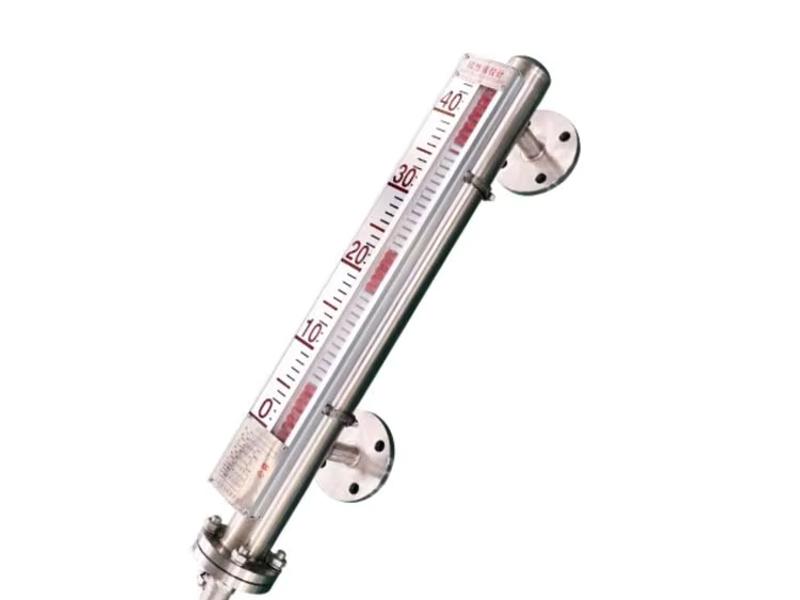
A magnetic level gauge is a visual indicating column mounted alongside the vessel and connected to the process at top and bottom. Inside the column, a float carries a magnetic assembly that drives an external indicator. To measure an interface, the gauge is fitted with two floats: a standard level float near the top of the column and a colored interface float with a density between the two liquids. The two floats appear at different positions in the indicator — usually distinguished by color — giving operators an at-a-glance reading of both the surface and the boundary. A magnetostrictive or reed-switch transmitter can be added to the same column for remote 4-20 mA/HART or Modbus output.
Interface accuracy is typically ±5-10 mm, which is adequate for most separators and much of chemical duty, and noticeably better than pressure-based methods in low-density-difference service because the float responds directly to buoyancy rather than to an inferred pressure ratio. The physical principle behind the gauge is covered in detail in our guide to the magnetic level gauge working principle, and WELK manufactures the standard magnetic level gauge with single or dual floats.
Differential pressure measures the interface indirectly. A transmitter connected between two pressure taps at different heights measures the combined hydrostatic pressure of the liquid layers; if the total level is known and both liquid densities are stable, the interface is calculated from the pressure balance.
DP is inexpensive, proven, and requires no in-tank element — an advantage in fouling or high-temperature service. But it is an inference, not a direct measurement, and its accuracy collapses as conditions drift. If either liquid's density changes with temperature or composition, the calculated interface shifts even though the real interface has not moved. And because the interface contributes to differential pressure only in proportion to the density difference, a small density difference means a large interface change produces only a small pressure change. Accuracy in the ±10-25 mm range is typical and can be worse in light-liquid service. DP remains a reasonable choice for simple, stable two-liquid systems where the density difference is large and tight control is not critical.
Capacitance probes sense the change in dielectric constant around a rod or cable. Because immiscible liquids usually have different dielectric constants, the probe's capacitance changes as the interface moves past it. A single continuous probe derives the interface from the capacitance profile, while multiple short probes each report which liquid is at their height.
Oil-water service suits this method well: water has a very high dielectric constant (around 80) while hydrocarbons are typically 2-4, and the large contrast produces a strong signal. Accuracy is typically ±10-20 mm.
The weakness of capacitance is anything that blurs the dielectric transition: an emulsion layer at the boundary, conductive coatings building up on the probe, or foam at the surface. Each reduces the sharpness of the signal and shifts the apparent interface toward the middle of the transition band. Capacitance is a practical, economical choice when the dielectric contrast is strong and the process is clean, but it should be validated against the actual liquids before specification.
Guided wave radar launches a microwave pulse down a probe extending through the liquid. In interface mode, the instrument analyzes two echoes: the first comes from the top surface, and a second is generated at the interface where the dielectric constant changes. The interface position is derived from the time of flight of the second echo.
For a usable interface echo, the upper liquid must be a low-dielectric fluid — typically below about 10, ideally with a contrast of 10 or more against the lower liquid — so the classic application is oil over water or hydrocarbon over an aqueous phase. Typical interface accuracy is in the ±10-25 mm range, and performance is best when the interface is sharp and the upper layer is thick enough for the two echoes to separate.
Guided wave radar needs no floats, no density engineering, and can measure through some foam. But it struggles when the two liquids have similar dielectric constants, when emulsion obscures the interface, or when the top layer is too thin for echo separation. It is an excellent alternative to float methods where the density difference is marginal but the dielectric contrast is strong.
| Method | Typical interface accuracy | Key requirement | Best suited for | Main limitation |
|---|---|---|---|---|
| Magnetostrictive transmitter; dual float | ±1-2 mm | Density difference ≥ ~50 kg/m³ | Oil-water separators; fuel-water tanks; storage tanks | Not for very small density differences or heavy emulsion |
| Magnetic level gauge with interface float | ±5-10 mm | Float density between the two liquids | Local indication with transmitter option | Interface float must be sized to the specific liquids |
| Differential pressure | ±10-25 mm; density-dependent | Known; stable densities | Large stable tanks; simple liquids | Accuracy falls as density difference shrinks |
| Capacitance | ±10-20 mm | Dielectric constant contrast | Oil-water; clean service | Affected by coating; emulsion; foam |
| Guided wave radar; interface mode | ±10-25 mm | Upper liquid low dielectric (< ~10); strong contrast | Oil over water or aqueous phase | Weak interface echo if dielectrics are similar |
Specifying an interface instrument is a matter of matching the method to five process realities.
This is the first filter. Float-based methods — magnetostrictive and magnetic gauge — need a density difference of at least roughly 50 kg/m³ to size a float that sinks in the upper liquid and floats in the lower. Most oil-water and fuel-water separations clear this comfortably. If the density difference is smaller, pressure-based or radar methods may be the only practical options, and even those lose sensitivity as the difference narrows. Know both liquid densities at operating temperature before you start.
Few interfaces are razor-sharp. An emulsion layer — a mixed band of the two liquids — can sit at the boundary, and foam can cover the surface. Floats respond to their buoyant position within the band; radar and capacitance see a gradual transition rather than a step, and every method reports the interface with a band of uncertainty. Where emulsion is heavy, direct float methods with a longer interface float generally give the most repeatable answer, but tell the vendor the expected band thickness so the float and installation can be sized accordingly.
Temperature affects density (and therefore float sizing and DP inference) and dielectric constant (radar and capacitance). Pressure matters because it constrains the instrument's mechanical rating. High-pressure separators and vessels call for a rated gauge with appropriate flanges and body material — WELK's high-pressure magnetic level gauge covers that duty. If the process is corrosive, wetted parts must be upgraded; a lined magnetic level gauge is the standard answer for aggressive chemical service.
The instrument must physically fit. Magnetostrictive and radar probes need a top nozzle and enough probe length to reach the interface across the operating range; a side-mounted magnetic gauge needs top and bottom process connections with the column clear of tank internals. Very tall tanks favor magnetostrictive or radar, whose probes can reach 20 m and beyond, while pressure-based methods work at any height because they have no probe. Vessel internals, baffles, and mixers must not interfere with floats or probe installation.
Finally, consider how the reading will be used. Local-only service is well served by a magnetic gauge indicator. Control or remote monitoring needs an electronic transmitter with 4-20 mA, HART, or Modbus output — the magnetostrictive interface transmitter provides both total and interface values over the same bus, which is what most control loops need anyway.
In a classic oil-water separator, the magnetostrictive dual-float transmitter is the default. The level float reports the oil surface; the interface float sits at the oil-water boundary and feeds the water draw-off control valve. Because the transmitter outputs both values, one instrument closes the separator's two control loops, and its ±1-2 mm interface accuracy keeps the water leg stable, preventing both water carryover into the oil outlet and oil drag into the water outlet. For redundant local indication, a magnetic level gauge with a colored interface float provides a visual cross-check that can be verified against the transmitter during commissioning and routine maintenance.
Chemical tanks complicate the picture because the liquids vary widely in density, dielectric constant, corrosivity, and temperature. Start with the density difference: if it clears roughly 50 kg/m³ and the process is not heavily emulsified, a magnetostrictive interface transmitter or a magnetic gauge with an interface float gives the most accurate result. If the top liquid is a low-dielectric hydrocarbon over an aqueous phase, guided wave radar in interface mode is a strong float-free alternative. If densities and dielectrics are both marginal, DP with compensated density is the fallback, accepting lower accuracy.
Corrosion resistance drives the wetted-material choice. For aggressive chemicals, an anti-corrosion lined magnetic level gauge protects the column and floats, and the same consideration applies to probe materials on magnetostrictive and radar instruments. Our chemical storage tanks application guide covers material and mounting questions in more detail. Where the two liquids are stored at scale — fuel-water settling tanks, product storage with a water leg — the magnetostrictive level gauge for storage tanks extends dual-float interface measurement to tall vessels, and a magnetic gauge remains the standard local backup.
For most oil-water separators, a magnetostrictive interface transmitter with dual floats is the best method. It measures both the oil surface and the oil-water boundary in one device with typical interface accuracy of ±1-2 mm, and it works on any tank where the density difference between oil and water is at least about 50 kg/m³ — which is nearly all of them. A magnetic level gauge with an interface float is the standard local-indication alternative, and guided wave radar in interface mode works well when no float is acceptable.
For float-based methods, a density difference of roughly 50 kg/m³ (0.05 g/cm³) between the two liquids is the practical minimum, because the interface float must be dense enough to sink in the upper liquid and light enough to float in the lower. Below that difference, pressure-based and radar methods may still be viable but with lower accuracy, and the interface itself is harder to control sharply.
Typical figures are: magnetostrictive dual-float transmitters ±1-2 mm; magnetic level gauges with interface float ±5-10 mm; guided wave radar and capacitance in the ±10-25 mm range; and differential pressure at best ±10-25 mm, often worse when the density difference is small. The right target depends on the process — a separator water-draw loop usually needs the tightest control.
Yes. Guided wave radar has a dedicated interface mode that derives the interface position from a second echo reflected where the dielectric constant changes. It works best when the upper liquid is a low-dielectric fluid (typically below about 10), such as oil or hydrocarbon over water or an aqueous phase, and it avoids the need to size floats. It is less reliable when the two liquids have similar dielectric constants or when a thick emulsion layer blurs the boundary.
Choose a magnetostrictive interface transmitter when you need tight, continuous interface control or remote output of both level and interface — it offers the best accuracy (typically ±1-2 mm) and feeds a 4-20 mA/HART or Modbus control loop. Choose a magnetic level gauge with an interface float when local, mechanical indication is the priority and you want a simple, intrinsically safe visual reading, optionally with a transmitter added to the column.
Interface duty is not off-the-shelf. The right instrument depends on the density difference between your two liquids, the expected emulsion band, temperature and pressure, and your tank geometry — which is why a specification always starts with your process data.
If you are measuring an oil-water interface in a separator or a product/aqueous interface in a chemical tank, contact us with your two liquid densities at operating temperature, tank height and nozzle details, and process temperature and pressure. WELK's engineers will recommend a magnetostrictive interface transmitter, a magnetic level gauge with an interface float, or the appropriate alternative, sized to your vessel and supplied with the output your control system needs — backed by factory testing and quality control documentation. Request your quote today.
Dual-float magnetostrictive transmitter for total level and liquid-liquid interface measurement review.
Magnetic level gauge for local indication on pressure vessels up to 16 MPa and 350 C.
Magnetic level gauge with PTFE, PP, PVC or lined wetted parts for corrosive liquid tanks.
Send drawings, dimensions, material, environment or operating conditions, and we will help confirm the right specification.
Uploaded reference files are included with the inquiry. For larger CAD packages, reply to the confirmation email or send them here:
Our team typically replies within 24 hours.