Technical
Level Measurement Technologies Compared: Choose the Right Sensor
Compare radar, ultrasonic, hydrostatic, magnetic, and point level switches: accuracy, limits, cost. Get a free consultation from WELK engineers today.
Compare radar, ultrasonic, hydrostatic, magnetic, and point level switches: accuracy, limits, cost. Get a free consultation from WELK engineers today.
Level measurement technologies are the sensing systems used to determine the height or amount of material — liquid, slurry, or bulk solid — inside a tank, silo, or vessel. The five main families are radar (FMCW non-contact), ultrasonic, hydrostatic (submersible), magnetic level gauges with magnetostrictive transmitters, and point level switches. They differ sharply in real-world performance: magnetostrictive transmitters hold about ±1 mm, an 80 GHz FMCW radar achieves ±2 mm, ultrasonic sensors deliver roughly ±3-5 mm with a 0.2-0.3 m blind zone near the sensor face, and hydrostatic transmitters run at about 0.5% of full scale. A tuning fork point switch detects a material change in under one second. This guide compares each technology on accuracy, suitability, limitations, and cost so a procurement manager or process engineer can shortlist the right instrument for a specific tank, silo, or vessel.
Level measurement answers one operational question: how much material is in this vessel right now? The answer may be continuous (a live level value, used for inventory, dosing, or process control) or point-based (a discrete high, low, or presence signal used for alarms, interlocks, and overfill protection). Every plant that stores or processes liquids or bulk solids needs at least one of these two functions — and many tanks need both.
Choosing a technology is not about picking the "best" instrument in the abstract. It is about matching the sensing principle to the material, the vessel geometry, the process conditions, and the required output. A sensor that performs flawlessly in a water sump can fail within a week in a dusty cement silo. The sections below break down the physics, strengths, and failure modes of each technology so the trade-offs are explicit.
Before reviewing each family, define the selection criteria you will use to judge them:
Hold these criteria in mind as each technology is examined.
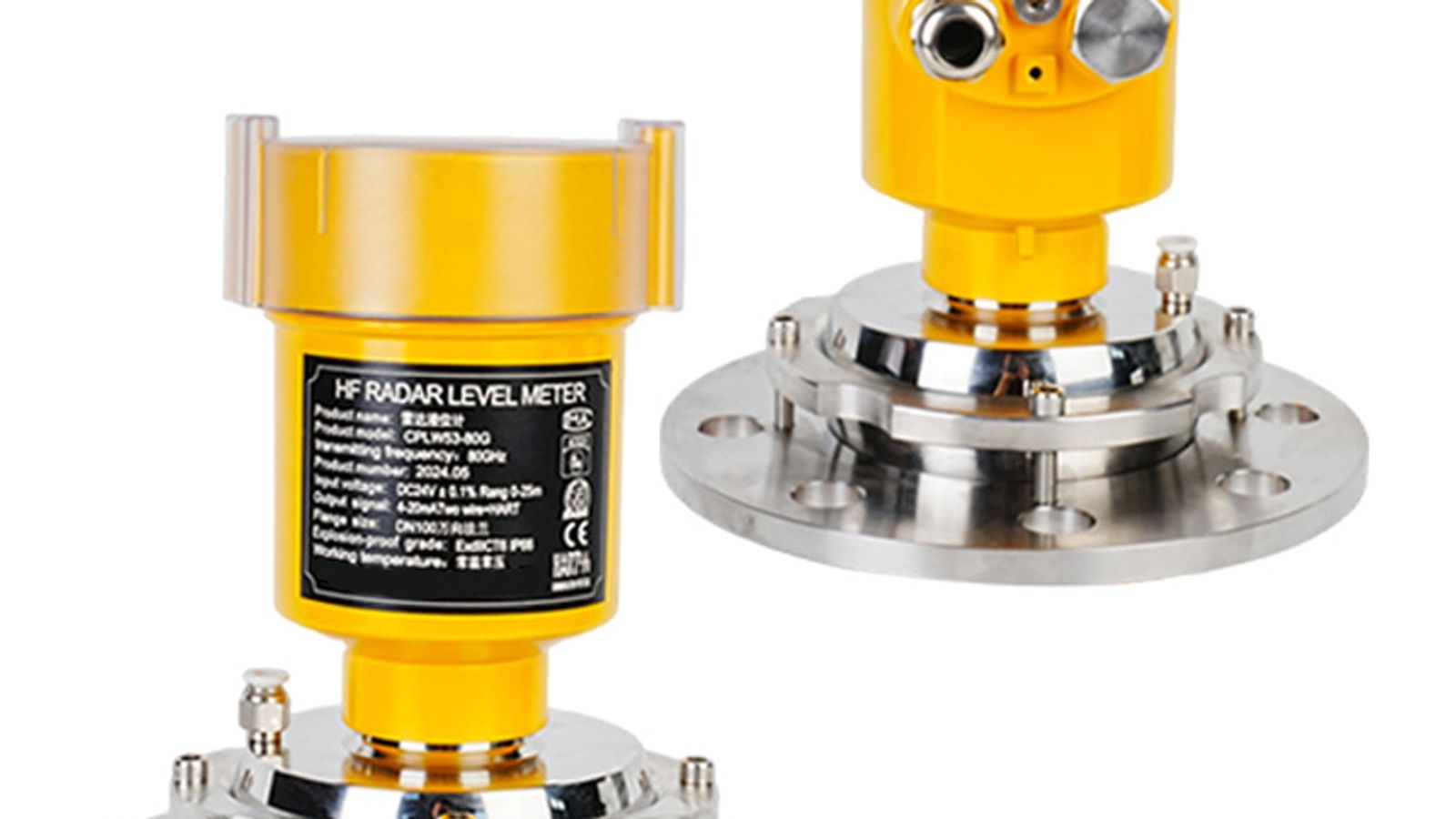
Radar is currently the fastest-growing continuous level technology, and the 80 GHz FMCW type is the mainstream. FMCW stands for frequency-modulated continuous wave: the transmitter sweeps a frequency ramp, and the difference between the transmitted and reflected signal frequencies is directly proportional to distance. This gives the radar a clean, high-resolution echo and allows a compact antenna with a narrow beam angle — roughly 3-4 degrees at 80 GHz — which fits small nozzles and stilling wells.
Specifications tell the story. A typical 80 GHz FMCW radar level transmitter delivers ±2 mm accuracy with high repeatability, works across a range of roughly 0.1 to 100 m, and is unaffected by temperature, pressure, vapor, dust, and most foam. Because it is non-contact, there are no wetted moving parts to wear. Outputs are standard 4-20 mA, HART, and RS-485/Modbus, and ATEX/IECEx Ex d and Ex ia versions cover hazardous areas up to zone 0 where required.
The main technical constraint is dielectric constant (permittivity). Radar echoes are reflected by the change in dielectric between the gas phase and the material; materials with a high dielectric constant (water ≈ 80, most acids) give strong echoes, while low-dielectric materials such as certain solvents, plastics, or powders (ε below about 2) reflect little energy. This is not a limitation of the instrument so much as a setup condition: low-dielectric powders may need a stilling well, a parabolic or high-gain antenna, or careful aiming to produce a usable echo.
Radar is the right choice for demanding processes: chemical and petrochemical reactors, oil and gas storage, LNG and cryogenic tanks, high-temperature and high-pressure vessels, and aggressive media. Its cost is the main drawback — a process-grade radar is more expensive than ultrasonic or hydrostatic instruments. For a typical industrial radar selection, a WELK 80 GHz radar level transmitter is appropriate where accuracy and reliability under harsh conditions outweigh the upfront price.
Ultrasonic level transmitters measure the time of flight of a sound pulse from the transducer to the material surface and back. The speed of sound in air is roughly 343 m/s at 20 °C and rises by about 0.6 m/s per degree Celsius, so every ultrasonic instrument includes a temperature sensor and applies temperature compensation to keep readings stable across day-night and seasonal swings. Ignoring this compensation is the single most common cause of ultrasonic drift.
Two physical limits are worth memorizing. First, the blind zone: the transducer cannot measure while its own transmit pulse is still ringing down, which creates a dead zone of about 0.2-0.3 m immediately below the sensor. That matters when a tank is frequently filled to the top, because the ultrasonic unit stops reporting near the full point. Second, the medium itself: sound needs a gas to travel through, so ultrasonic cannot measure in a vacuum, and heavy foam, thick dust, steam, or strong air currents absorb or scatter the pulse and degrade the echo. Accuracy is typically ±3-5 mm or 0.2-0.5% of range, whichever applies.
Within those limits, ultrasonic is an excellent value. It is non-contact, has no moving parts, requires little maintenance, and handles corrosive liquids well since the transducer face can be made from PVDF or PTFE. It is the default for water and wastewater, open channels and flumes, and many chemical storage tanks. A low blind zone ultrasonic level sensor reduces the dead zone to suit tanks that run near full, extending the usable range of an otherwise low-cost solution.
Hydrostatic transmitters measure level indirectly, by sensing the pressure exerted by the liquid column above a submerged probe. The physics is straightforward: pressure equals density times gravity times height (P = ρgh), so level equals pressure divided by (density × gravity). A typical submersible transmitter achieves about 0.5% of full scale accuracy and outputs 4-20 mA over a vented cable that references atmospheric pressure, so readings are unaffected by barometric changes.
The submersible form factor makes this technology ideal for wells, sumps, lift stations, open tanks, and wastewater basins, where the probe simply hangs in the medium. Because the sensor is immersed, it is completely immune to foam, vapor, turbulence, wind, and dust — the very things that trouble ultrasonic and, to a lesser extent, radar. Material compatibility is handled with stainless steel, PVDF, or ceramic diaphragms, and IP68 cable sealing allows permanent submersion.
The accuracy of hydrostatic measurement is only as good as your knowledge of the medium's density (specific gravity). If the process liquid is a homogeneous fluid with a stable density, 0.5% FS is realistic. If density drifts — brine concentration changes, or emulsions separate — the reading shifts with it. Sludge and crystallization can also clog or coat the diaphragm over time, and a purely submersible transmitter cannot serve a closed, pressurized vessel, where a differential-pressure transmitter with two pressure ports would be required instead. For open-tank and groundwater duty, a submersible hydrostatic level transmitter offers one of the lowest installed costs per point.
Magnetic level gauges take a different approach: a float containing an internal magnet rises and falls with the level inside the vessel or an external chamber, and a chain of magnetic flags, flappers, or a magnetic shuttle on the outside follows the float's position. The result is a purely mechanical, power-free local level indication that is visible at a glance from across a plant floor.
The practical advantages are significant. Because the level is read through a non-magnetic wall, the gauge can be fully sealed, insulated, or steam-traced, which suits high-temperature, high-pressure, cryogenic, and corrosive service. There are no electrical components inside the vessel. To add an electronic output, a magnetostrictive transmitter is clamped to the gauge: it times a torsional pulse along a magnetostrictive wire, and the position of the float's magnetic field determines the transit time. Magnetostrictive transmitters reach about ±1 mm accuracy, among the best of any industrial level technology, and are stable over long cable runs.
A distinctive capability is interface measurement. Two immiscible liquids with different densities, such as oil and water, produce two floats of different densities in the chamber, so a single gauge reads both the overall level and the position of the interface. This makes the magnetic gauge the standard choice for separators, fuel storage, and chemical interface service. The trade-offs are a mechanical float that must be density-matched to the fluid, some moving parts to maintain, and the need for external access to read the indicator. Where local visibility, intrinsic safety, and precise continuous measurement matter, a magnetic level gauge with a magnetostrictive transmitter is hard to beat.
Point level switches answer a binary question: is the material at this height, yes or no? They do not report a level value; instead they trip when material covers the sensing element, driving alarms, pump control, and safety interlocks. The main sub-types are tuning forks, vibrating rods, rotary paddles, and RF admittance switches.
A tuning fork level switch is a piezoelectric-driven fork that vibrates at its natural frequency, typically a few hundred hertz. When material covers the fork, the vibration is damped, and the electronics detect the change and switch the output within about one second. There are no moving parts, so maintenance is minimal, and the fork is self-cleaning in most liquids. Liquid versions trip on densities above roughly 0.5-0.7 g/cm³, while solid versions respond to bulk densities as low as 0.02-0.03 g/cm³, which is why fork switches dominate overfill protection on both tanks and silos. ATEX/IECEx versions are available for zone 0/1 and dust zones. A standard tuning fork level switch covers high, low, and pump-control duty on liquids.
The vibrating rod level switch is the solids-oriented cousin: a probe rod is driven to vibrate, and the presence of powder or granules dampens the motion and trips the output. It handles low bulk densities and light powders that would defeat other sensors, which makes it a workhorse for hoppers, silos, and storage vessels handling plastics, cement, fly ash, and food powders. Alongside it, the rotary paddle switch uses a slowly rotating paddle that stalls when material surrounds it, triggering a torque switch; it is simple, reliable, and inexpensive, at the cost of a mechanical drive that eventually wears. For silo powder level measurement, vibrating rod and rotary paddle switches are the conventional low-cost choice for high- and low-level alarms.
RF admittance (also called capacitance) switches apply a low-frequency radio-frequency signal to a probe and monitor how the admittance changes when material contacts it. The key engineering detail is a guard electrode that ignores buildup on the probe, so the switch remains accurate even when the material is sticky or conductive. RF admittance switches handle liquids, slurries, foam, and interface detection, work on conductive and non-conductive media alike, and have no moving parts. They are a strong choice where coating, foam, or a wide range of media makes other point technologies unreliable.
The biggest scoping decision is not which brand to buy but whether you need a continuous level transmitter, a point level switch, or both. A continuous transmitter feeds your control system live inventory and process values; a point switch provides a deterministic alarm or interlock. They are complements, not substitutes. Overfill protection, dry-run protection on pumps, and safety interlocks are almost always implemented with point switches — frequently SIL-rated — even on tanks that already have a continuous transmitter. Many plants install a continuous instrument for normal operation and a tuning fork or vibrating rod switch as the independent safety layer, because the two principles fail in different ways.
| Technology | Best for | Typical accuracy | Main limitations | Typical cost (USD) |
|---|---|---|---|---|
| 80 GHz FMCW radar | Chemical; oil and gas; high temp/pressure; aggressive media | ±2 mm | Higher cost; low-dielectric materials need careful setup | $500-3;000+ |
| Ultrasonic | Water; wastewater; open channels; chemical storage | ±3-5 mm (0.2-0.5% of range) | 0.2-0.3 m blind zone; affected by foam; dust; vacuum | $150-800 |
| Hydrostatic (submersible) | Wells; sumps; open tanks; wastewater basins | 0.5% FS | Requires stable density/specific gravity; not for closed pressurized tanks | $100-600 |
| Magnetic gauge + magnetostrictive | High temp/pressure; corrosive; interface (oil/water) | ±1 mm (magnetostrictive) | Float density limits; needs external access for indicator | $300-2;500 |
| Point switches (tuning fork; vibrating rod; rotary paddle; RF admittance) | Overfill protection; dry-run; high/low alarms | Detection in under 1 s | Point signal only — no continuous reading | $50-500 |
Work through the vessel and material, and the technology often selects itself:
If you are weighing radar against ultrasonic for a specific tank, a radar vs ultrasonic level meter comparison captures the decision factors in detail. In most cases the decisive inputs are pressure, foam, dust, and how close the level runs to the tank top.
Magnetostrictive transmitters are the most accurate at about ±1 mm, followed by 80 GHz FMCW radar at ±2 mm and ultrasonic at ±3-5 mm; hydrostatic transmitters run about 0.5% of full scale. Accuracy is only one factor — match the technology to your process conditions or a "most accurate" sensor that cannot survive the environment is worthless.
Radar is better for pressurized, dusty, foamy, or high-temperature vessels and for low-dielectric materials, but costs more. Ultrasonic is the value choice for clean liquids at atmospheric pressure where the 0.2-0.3 m blind zone near the top is acceptable. If the tank runs near full or the atmosphere is steamy or dusty, choose radar.
No. A point switch gives a single high, low, or presence alarm; a continuous transmitter reports the live level value. Most tanks with safety interlocks use both: a continuous transmitter for inventory and control, plus an independent point switch for overfill or dry-run protection.
It depends on the technology. Ultrasonic relies on the speed of sound, so it needs temperature compensation; radar is essentially unaffected by temperature; hydrostatic readings shift if temperature changes the liquid density (specific gravity); and magnetic gauges have negligible thermal error, though thermal expansion of the vessel itself can slightly change the measured volume.
Yes. Radar transmitters, tuning fork switches, and other level instruments are available with ATEX and IECEx approvals for gas zones 0, 1, and 2 and dust zones 20, 21, and 22, in flameproof (Ex d) and intrinsically safe (Ex ia) variants. When specifying, define the zone, gas or dust group, and temperature class before requesting a quote.
Selecting a level technology comes down to a handful of process facts, but getting them wrong costs far more than the instrument itself. WELK manufactures a complete range of radar, ultrasonic, hydrostatic, magnetic, and point level instruments in-house, and its engineers offer free consultation and RFQ support to help you specify the right device for your tank, silo, or vessel — including sizing, material selection, hazardous-area approvals, and output signal planning. Describe your application and let the WELK team recommend the most cost-effective measurement solution before you commit to a purchase.
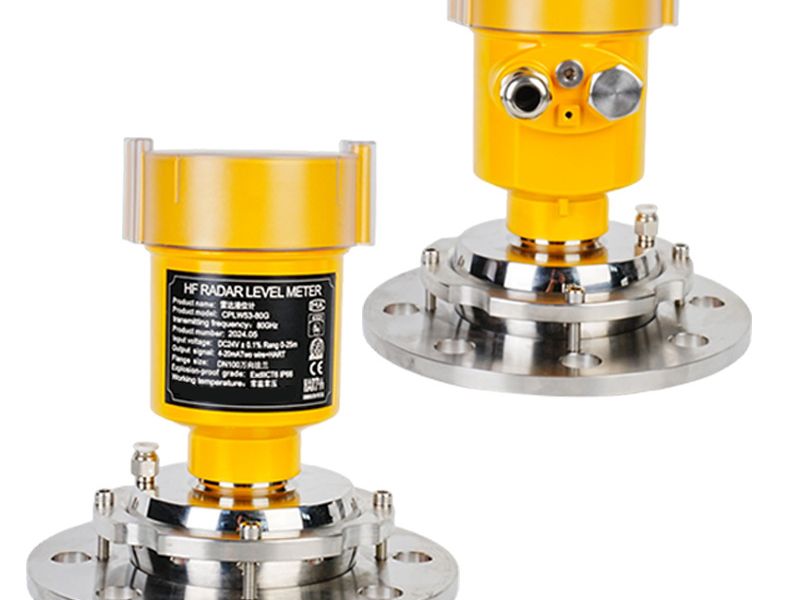
Configurable 80 GHz FMCW radar level meter for storage tanks, process vessels and selected solids with narrow-beam non-contact measurement.
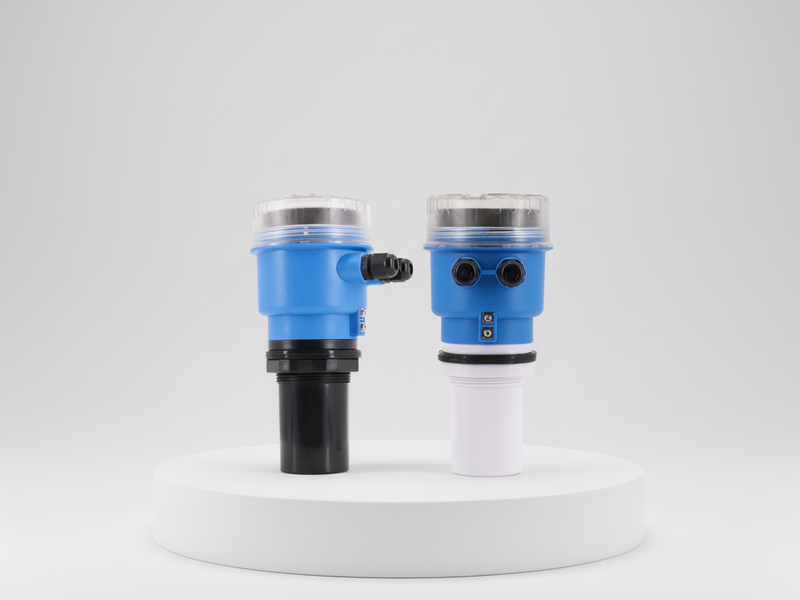
Short-range ultrasonic level sensor for shallow tanks where the highest liquid level is close to the sensor face.
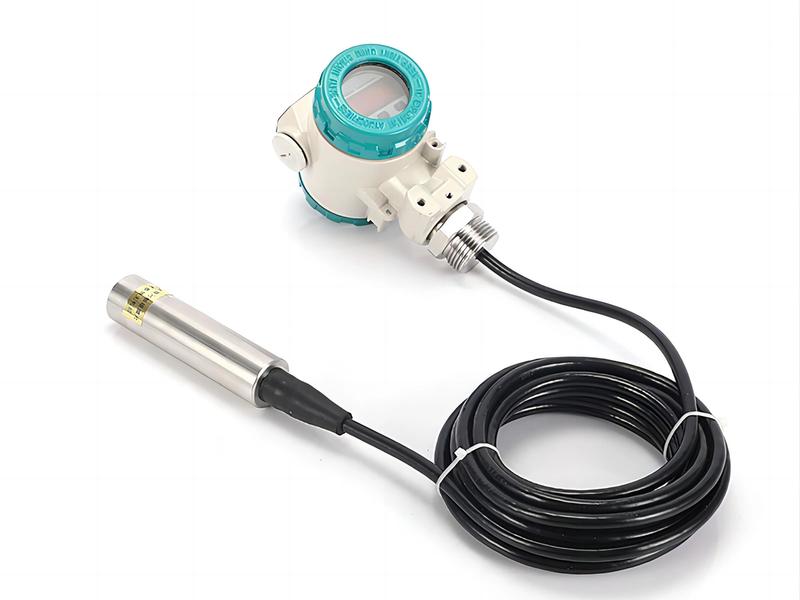
Submersible hydrostatic level transmitter for wells, reservoirs, tanks and water projects with cable length and output configured by depth.
Send drawings, dimensions, material, environment or operating conditions, and we will help confirm the right specification.
Uploaded reference files are included with the inquiry. For larger CAD packages, reply to the confirmation email or send them here:
Our team typically replies within 24 hours.