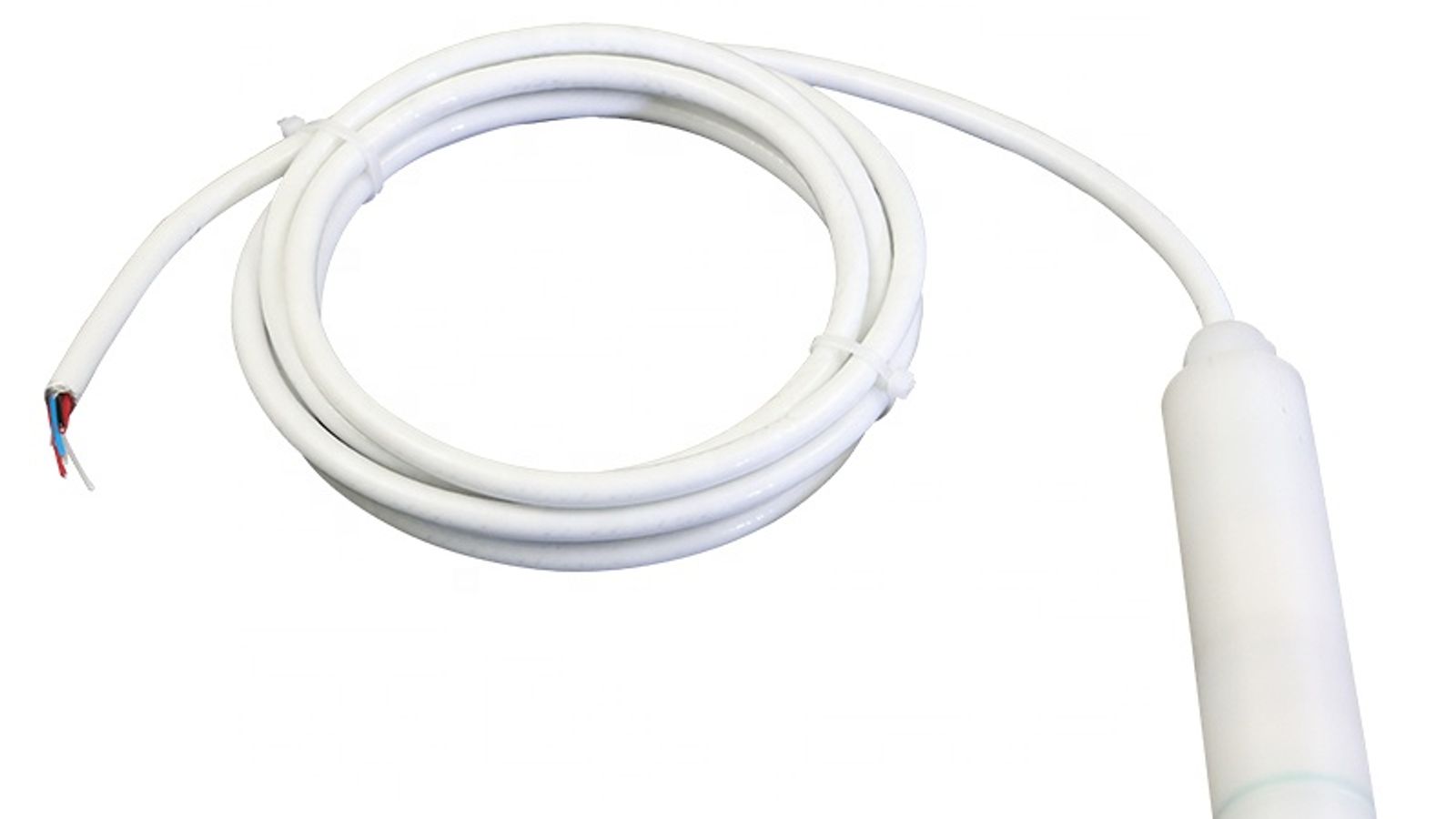
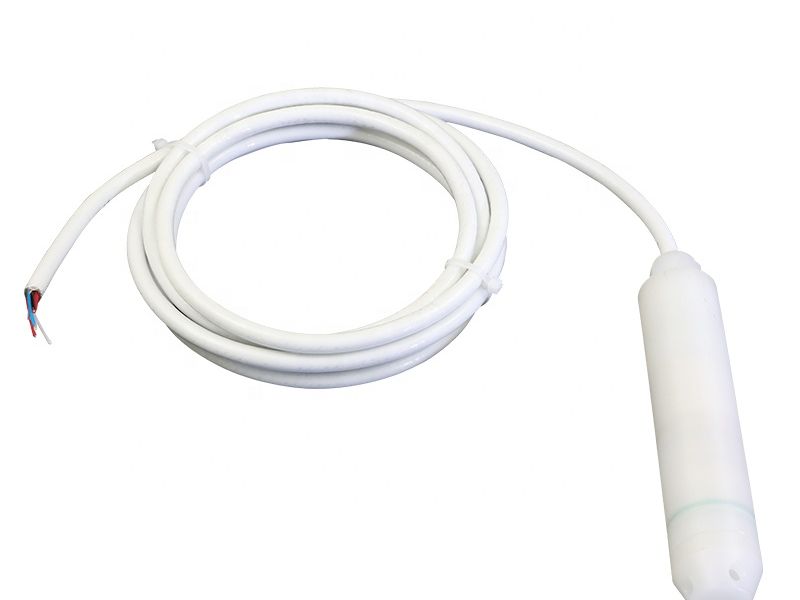
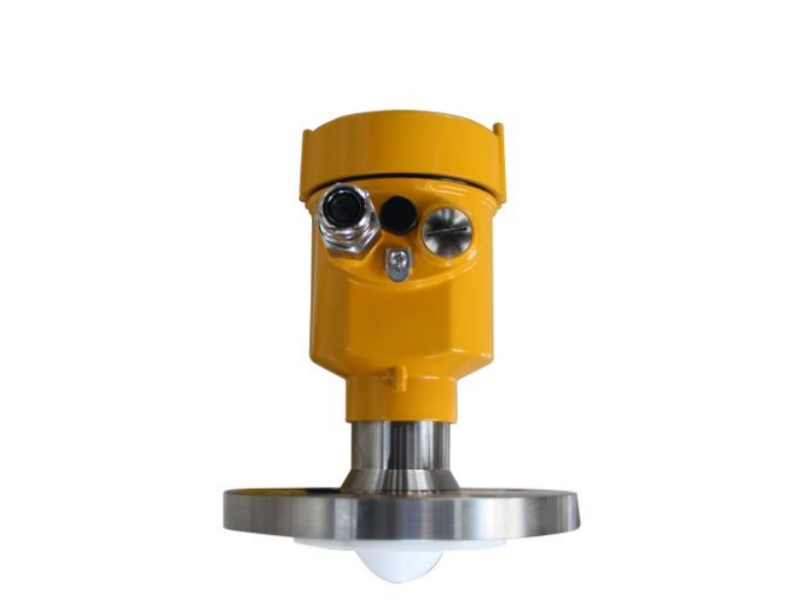
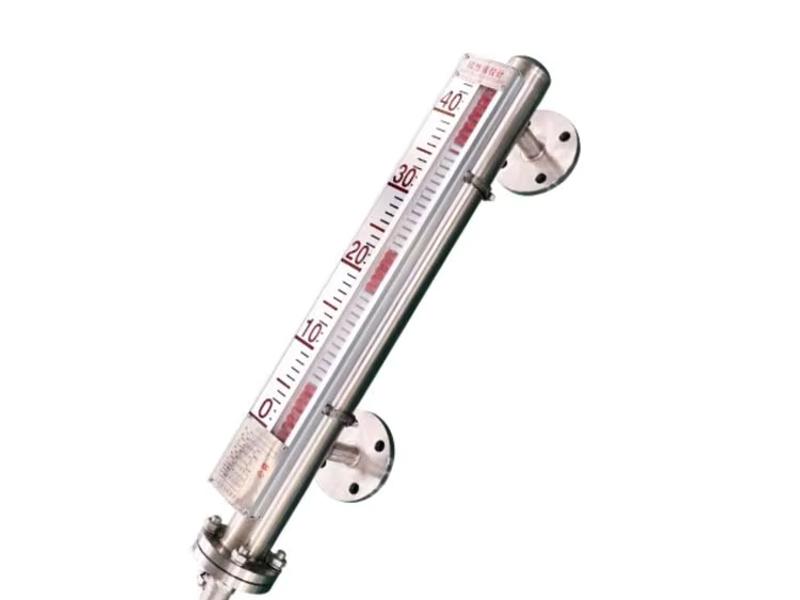
Chemical storage tank level measurement is the continuous or point-level determination of liquid height inside tanks holding acids, alkalis, solvents and other corrosive media, using instruments whose wetted parts are engineered to survive the specific chemical environment. Because media compatibility drives reliability, the wetted materials — typically 316L stainless steel, PTFE/PFA linings, polypropylene (PP) or Hastelloy — must be matched to the stored chemical: a 316L diaphragm can be corroded through within weeks in concentrated hydrochloric acid, while a PTFE-lined probe or PTFE-covered radar antenna typically runs for years in the same service. Practical chemical storage tank level measurement systems span continuous technologies such as 80 GHz FMCW radar with a PTFE antenna (typical accuracy ±2–3 mm), hydrostatic transmitters with PTFE/PP wetted parts (±0.5% FS), and magnetostrictive or visual magnetic gauges, plus capacitance point switches for high/low and overfill alarms — most transmitting 4–20 mA/HART to a DCS, PLC or tank farm SCADA system. Where stored solvents emit flammable vapors, instruments must additionally carry ATEX/IECEx certification matched to the hazardous zone (Zone 0, 1 or 2) in which the tank operates. Choosing the right sensor is therefore a balance of chemical compatibility, accuracy, maintenance cost and safety — and this guide walks through each decision.
Why Chemical Storage Tanks Need Specialized Level Sensors
A general-purpose level sensor designed for water or oil will fail early in chemical service, and the failure mode is rarely benign. Corrosion attacks the wetted parts first: pitting and pinhole leaks on a 316L diaphragm in hydrochloric acid, stress corrosion cracking on stainless flanges in hot chloride or caustic service, and rapid attack of bare aluminum or carbon steel housings by fumes. A leak here is not just a maintenance cost — it releases process chemical into the plant and, at minimum, contaminates the containment area.
The second problem is the headspace. Chemical tanks rarely have clean, dry vapor spaces. Acid fumes and solvent vapors condense on transducer faces, ultrasonic membranes and antenna surfaces; crystallizing media such as caustic soda can freeze floats solid or block pressure ports when temperature swings. Foam, agitation from dosing pumps and entrained solids add further interference. A sensor must survive both the liquid below and the atmosphere above it.
Third is safety. Many stored chemicals — methanol, toluene, acetone, xylene — produce flammable vapors that can form an explosive atmosphere inside the tank. An electrical instrument on the tank roof is then a potential ignition source, which is why hazardous-area (ATEX/IECEx) approval is mandatory rather than optional in most jurisdictions, and why overfill protection is commonly required by standards such as API 2350 and OSHA 1910.119 process safety management. In short, the tank environment attacks the sensor chemically, physically and electrically, and the sensor selection must answer all three attacks at once.
The wetted materials are the first decision, because they determine whether the instrument survives its first month. The table below covers the four material families that dominate chemical tank service.
| Wetted material | Typical service | Practical limits |
|---|
| 316L stainless steel | Dilute acids (up to ~10% HCl; up to ~20% H2SO4 at ambient temperature); caustic soda at moderate temperature | Not for hydrofluoric acid; pitting and stress corrosion cracking in hot chlorides and concentrated acids; avoid above ~60 °C in chloride service |
| PTFE / PFA lining | Near-universal chemical resistance — concentrated acids; alkalis; most solvents; continuous operation up to roughly 180 °C depending on form | Higher cost; needs careful lining integrity; some fluorinated intermediates and molten alkali metals excepted |
| Polypropylene (PP) | Dilute acids and alkalis up to ~90 °C; economical for bulk storage | Not for strong oxidizers (concentrated H2SO4; HNO3; hydrogen peroxide) or aromatic/hydrocarbon solvents that cause swelling |
| Hastelloy C-276 | Hydrochloric acid; hot concentrated sulfuric acid; wet chlorine; oxidizing chlorides | Expensive; justified only where other materials fail |
Two practical notes. First, the elastomers and seals are as important as the metal: an FKM (Viton) or EPDM O-ring that is incompatible with the chemical can leak long before the probe does, so confirm gasket material in the data sheet. Second, "stainless steel" is not a universal answer — specifiers frequently default to 316L and discover the chloride limits the hard way. For aggressive media, anti-corrosion hydrostatic level transmitters and PTFE-lined magnetic level gauges put the corrosion-resistant materials directly between the instrument and the liquid.
Sensor Selection by Chemical Type
Strong acids (HCl, H2SO4, HNO3)
For hydrochloric acid, eliminate bare 316L immediately. Use a non-contact radar with a PTFE/PFA antenna, or a hydrostatic transmitter with a PTFE wetted diaphragm. For sulfuric acid, compatibility is concentration- and temperature-dependent: dilute acid suits PP, concentrated acid demands PTFE, and hot concentrated acid may justify Hastelloy C-276. Nitric acid is oxidizing, so 316L is acceptable at low temperature but PTFE is safer for higher concentrations and temperatures. When in doubt, ask the vendor for a chemical compatibility chart that matches your concentration and temperature window before committing.
Caustic and alkali solutions (NaOH, KOH)
Moderate-temperature caustic is one case where 316L works, but hot caustic suffers stress corrosion cracking, and caustic soda is notorious for crystallizing when temperature drops — crystals can jam floats and plug impulse lines. A non-contact radar or an ultrasonic meter keeps wetted parts small and easy to keep clean; if you need local visual indication, use a PTFE-lined magnetic gauge with an insulated, heat-traced chamber.
Solvents and flammable liquids
Solvent headspace is flammable, so ATEX/IECEx approval is the primary filter. Non-contact 80 GHz FMCW radar level meters for corrosive liquids are the strongest option because radar is unaffected by vapor density, condensation or temperature gradients, and low-dielectric solvents such as toluene and hexane measure well when a stilling well is provided. Ultrasonic meters struggle here: solvent vapors scatter and attenuate the acoustic signal, and accuracy drifts. Reserve corrosion-resistant ultrasonic level meters for non-flammable, low-vapor service where cost matters.
Viscous and coating liquids (resins, polymer solutions, adhesives)
Viscous media clog small pressure ports and coat probe surfaces. A flanged hydrostatic transmitter with a flush PTFE diaphragm avoids port clogging, and a large-antenna radar handles coating better than a guided or float-based instrument. Magnetic gauges and floats are the wrong choice here — the float will stick.
Technology Comparison: Which Sensor Fits Which Tank
| Technology | Typical accuracy | Wetted materials | Typical range | Advantages | Limitations |
|---|
| 80 GHz FMCW radar; PTFE antenna | ±2–3 mm | PTFE/PFA antenna; PVDF flange; PP cover | 0–30 m (up to 100 m) | Non-contact; immune to vapors; condensation; foam and temperature; ATEX versions; no moving parts; low maintenance | Highest initial cost; dielectric and stilling-well design matter; needs adequate nozzle size |
| Hydrostatic; PTFE/PP probe | ±0.25–0.5% FS | PTFE/PFA diaphragm; PP/PTFE or 316L body | 0–20 m | Low installed cost; easy retrofit into existing nozzles; continuous 4–20 mA/HART output | Contact type; calibration shifts with density; diaphragm can clog in viscous or dirty liquids |
| Magnetic gauge; PP/PTFE lined | ±5–10 mm visual; ±1 mm with magnetostrictive | PP/PTFE lining; PTFE/PP or Hastelloy float | 0–6 m | Local visual indication with no power supply; no electronics in the tank; handles high temperature and pressure | Contact type; needs external chamber; not for viscous; coating or high-solids media; limited range |
| Ultrasonic; PVDF transducer | ±0.2–0.5% FS | PVDF/PTFE transducer face | 0–15 m | Low-cost non-contact; simple installation; no media contact | Accuracy degrades with vapors; foam; turbulence and temperature gradients; condensation on the face; needs clear acoustic path |
| Capacitance point switch | Repeatability ±2–3 mm at setpoint | PP/PTFE or Hastelloy probe; non-contact variants | Point level only | Simple; reliable high/low/overfill alarm; low cost; minimal maintenance | Point detection only — no continuous level; conductive or coating media can affect some designs |
The practical takeaway: radar wins where accuracy and vapor immunity justify the price; hydrostatic PTFE transmitters win where installed cost and retrofit ease dominate; magnetic gauges win for powered-down local indication; and capacitance point switches are the workhorse of independent overfill and low-level protection.
Containment Dike and Leak Detection Notes
Most chemical storage regulations treat overfill as the primary risk, and good practice separates the monitoring layer from the protection layer. Your continuous level transmitter is the monitoring layer; the independent, hard-wired high-high switch that trips the pump or closes the isolation valve is the protection layer. Standards such as API 2350 require this independence — the alarm switch should not share the same sensing element as the continuous transmitter.
Non-contact capacitance switches are well suited to this role because they tolerate corrosive media, coating and condensation better than mechanical floats. Mount one high-high switch for overfill prevention and one low-low switch for pump dry-run protection, and feed the high-high alarm through a dedicated relay chain that does not depend on the DCS logic. For the secondary containment dike itself, install leak detection in the dike sump or the double-wall tank annulus so a wetted or failing tank is caught before it empties into the soil — level or moisture detection in the sump gives the earliest warning of a breached inner tank. Document the alarm setpoints, test the interlock loop quarterly, and treat the non-contact capacitive level sensors as safety devices with their own maintenance schedule.
Installation and Safety: ATEX Zones, Venting and Nozzle Design
Hazardous-area classification drives both instrument selection and installation. ATEX/IECEx zones are defined by how often an explosive atmosphere is present: Zone 0 — gas present continuously or for long periods (the vapor space inside the tank); Zone 1 — gas likely in normal operation (the area around open tank vents); Zone 2 — gas unlikely and only brief (the wider vicinity). An instrument on the tank roof or nozzle sits in the classified atmosphere, so its approval must cover the zone at the mounting point, the gas group (IIA/IIB/IIC) and the temperature class (e.g., T4 ≤ 135 °C, T6 ≤ 85 °C) relative to the solvent's auto-ignition temperature. If you specify an unapproved device to save money, you are specifying a potential ignition source — this is the one line item that is not negotiable.
Venting matters for two reasons. First, pressure in the headspace: if the tank breathes through a conservation vent or flame arrester, a hydrostatic transmitter measures the pressure of the liquid column plus any tank pressure, so you need a vented gauge or pressure compensation, otherwise level reads high. Second, tank breathing can condense vapor onto antenna faces in cold weather; specify a PTFE droplet antenna or an antenna purge in heavily condensing service. Mount radar on a nozzle or stilling well that keeps the beam clear of the fill stream and internal obstructions, use a bridle for the magnetic gauge, keep the ultrasonic path clear of pipes, and ground and bond the instrument per IEC 60079 / NEC requirements using approved cable glands and seal-offs. Before ordering, run through a level instrument RFQ checklist so nozzle size, flange rating, zone, temperature class and output protocol are all captured on paper.
FAQ: Chemical Tank Level Measurement
What is the best level sensor for hydrochloric acid storage tanks?
Non-contact 80 GHz FMCW radar with a PTFE antenna, or a hydrostatic transmitter with a PTFE/PFA wetted diaphragm. Both avoid bare metal contact; 316L stainless steel is not suitable for concentrated HCl. For simple high/low protection, a non-contact capacitance switch with PTFE insulation is a cost-effective choice. Expect radar accuracy of ±2–3 mm and hydrostatic accuracy of about ±0.5% FS.
Can radar level meters measure reliably when the tank headspace is full of fumes and condensation?
Yes. 80 GHz FMCW radar with a PTFE/PFA-covered antenna is largely immune to vapors, condensation and temperature gradients, which is why it outperforms ultrasonic in acid and solvent tanks. In heavily condensing service, specify an antenna purge or a PTFE droplet antenna so droplets drain instead of bridging the signal path.
What does ATEX certification mean, and which zone do I need for my tank?
ATEX/IECEx certification confirms the instrument is safe to operate in a potentially explosive atmosphere. Zone 0 means gas is present continuously, Zone 1 means it is likely during normal operation, and Zone 2 means it is unlikely and brief. For solvent vapors, match the instrument's zone approval, gas group (IIA/IIB/IIC) and temperature class to the zone at the mounting point, and verify the certificate in the data sheet before purchase.
Should I choose a contact or non-contact level sensor for corrosive chemicals?
It depends on the chemical, viscosity, accuracy needs and budget. Non-contact radar keeps wetted parts limited to the antenna and avoids probe corrosion but costs more. Hydrostatic transmitters with PTFE wetted parts are cheaper and retrofit easily but must be cleaned if media crystallizes. Use magnetic gauges only where visual indication is required and the media is clean, and use point switches for independent alarms.
What accuracy can I expect from PTFE-lined level transmitters?
Hydrostatic PTFE/PP transmitters typically achieve ±0.25–0.5% FS — on a 4 m tank, roughly ±10–20 mm. Non-contact radar is more precise at ±2–3 mm regardless of tank height. Ultrasonic meters are about ±0.2–0.5% FS in clean conditions but degrade in vapor-filled headspace. State your required accuracy in the RFQ so the vendor can confirm the right technology.
Getting the Specification Right
Choosing a level sensor for a chemical tank is a compatibility problem first and an accuracy problem second: get the wetted materials and hazardous-area rating right, and most operational problems disappear. Send the vendor your chemical name, concentration, temperature, tank pressure, nozzle size and required accuracy, and ask for a written compatibility confirmation plus the ATEX/IECEx certificate for the proposed instrument. WELK's engineering team supports this directly through level-meters.com — submit your parameters for a quotation and application review, and you can verify the relevant certificates before you commit. A complete spec at the start means a sensor that still measures correctly after years in service, not after the first month.