Technical
Guided Wave Radar Level Transmitter: Cable vs Rod vs Coaxial
Compare cable, rod, and coaxial guided wave radar probes: accuracy, ranges, Dk limits, and installation. Get expert GWR level transmitter selection guidance.
Compare cable, rod, and coaxial guided wave radar probes: accuracy, ranges, Dk limits, and installation. Get expert GWR level transmitter selection guidance.
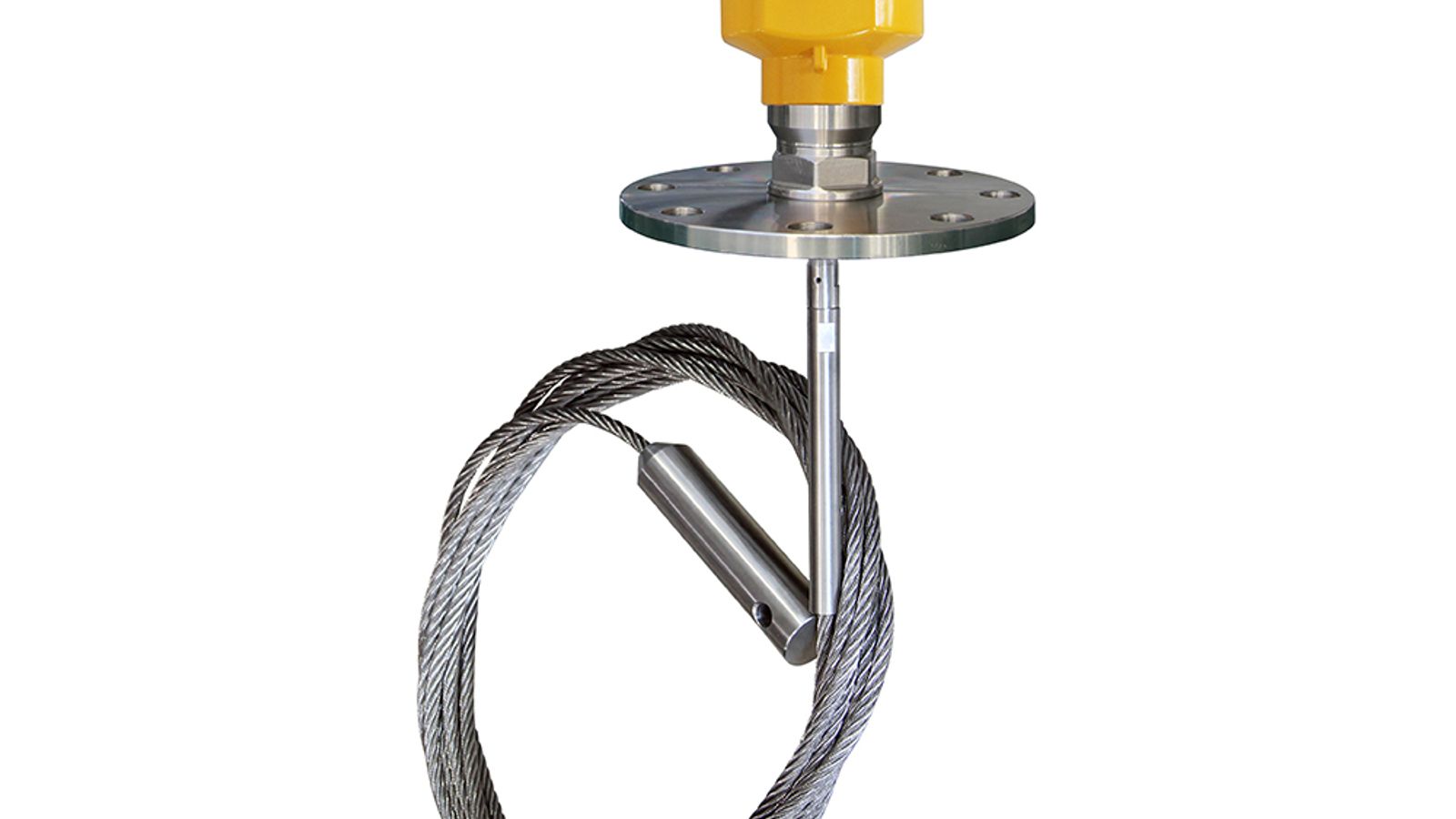
A guided wave radar (GWR) level transmitter is a continuous level instrument that measures liquid, slurry, or solid level by sending low-energy microwave pulses down a metal probe and timing the reflection that returns from the media surface — a technique called time-domain reflectometry (TDR). According to industry practice, a modern guided wave radar level transmitter achieves an accuracy of ±2 mm to ±5 mm, measures media with dielectric constants as low as Dk ≥ 1.4 (coaxial probe), Dk ≥ 1.6 (rod probe), or Dk ≥ 1.9 (cable probe), and covers measuring ranges from roughly 0.3 m up to 40 m depending on the probe type selected. Because the microwave energy travels down a fixed guide instead of radiating through open air, GWR keeps producing a reliable echo in exactly the conditions that defeat free-space radar: foam, steam, turbulence, agitators, and narrow or obstructed nozzles. The trade-off is a physical probe in the vessel, which is why probe selection — cable, rod, or coaxial — is the single most important engineering decision in any GWR application.
GWR uses the same physics as non-contact radar, but instead of radiating microwaves into the vapor space it launches them along a conductive probe. A pulse generator emits a low-energy microwave burst (100 MHz to 1.8 GHz band) that travels down the probe at close to the speed of light. When the pulse hits a change in dielectric constant — most commonly the media surface — part of the energy reflects back up the probe. Time-of-flight between emission and return gives distance directly, because propagation velocity along the probe is essentially constant.
The strength of the reflected echo depends on the dielectric contrast between the vapor space and the media. A high-Dk liquid such as water (Dk ≈ 80) returns a very strong echo, while a low-Dk hydrocarbon such as gasoline or kerosene (Dk ≈ 1.8–2.2) returns a weak one. The probe type determines how tightly the electromagnetic field is concentrated — and therefore how weak a reflection can still be detected with confidence.
When the media surface is below the probe, the pulse continues to the probe tip and reflects back, producing a reference echo that smart transmitters use for automatic self-check and for detecting probe damage or coating buildup.
GWR is also the industry's default solution for interface measurement. When two immiscible liquids are present, the pulse generates two reflections: a strong one at the upper liquid surface and a second, weaker one at the interface between the two liquids. The time gap between the two echoes yields both total level and interface position in one measurement, which is why oil-and-water interface duty — including in boiler and process vessel level measurement — relies almost exclusively on guided wave technology.
Non-contact radar radiates through the vapor space and never touches the process. But the moment any of the following conditions appear, guided wave radar is the more dependable choice:
When is non-contact the better call? When the vessel is open with a clean line of sight, or the media is corrosive, abrasive, or fouling enough to damage or coat a probe — or when a probe is physically impossible to install. For those applications, a non-contact 80 GHz radar level meter is often the better fit. The general rule: if you can tolerate a probe in the vessel and the service is difficult — foam, steam, low Dk, agitation, or interface — guided wave radar wins.
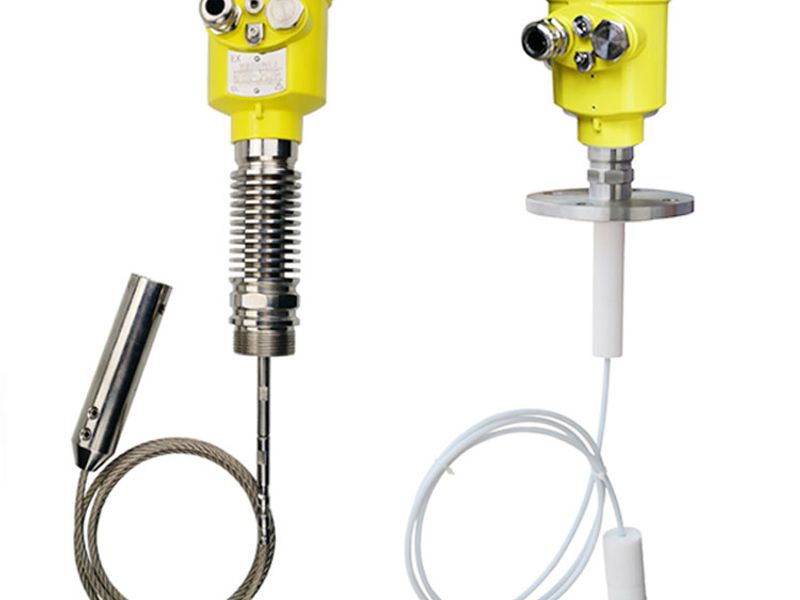
Every GWR transmitter performs the same TDR measurement, but the probe — the physical interface with the process — determines range, accuracy, minimum dielectric constant, and which services it can survive. The three standard types are cable, rod, and coaxial.
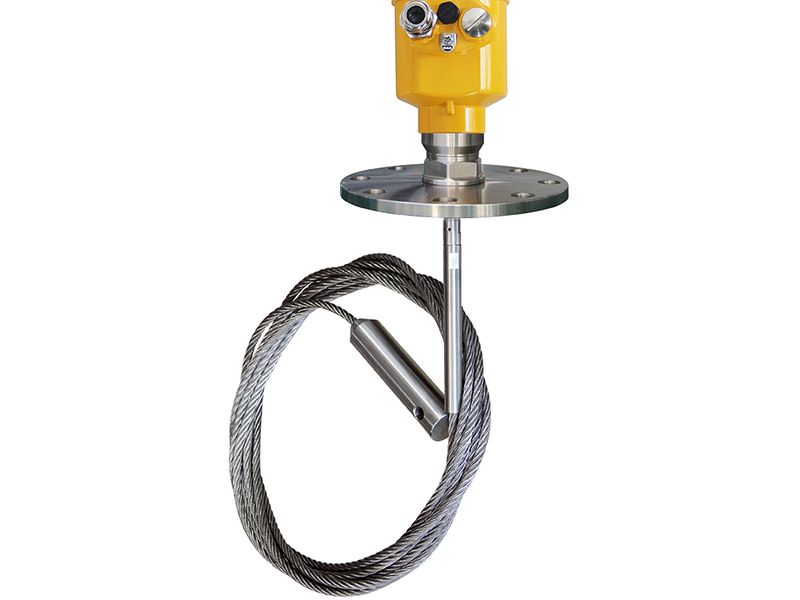
A cable probe is a flexible metallic wire, typically 2–6 mm in diameter, suspended from the process connection and tensioned by a bottom weight. It is the longest-range GWR option — 10–30 m standard, up to ~40 m in special builds — making it the natural choice for tall tanks, silos, and storage vessels. It ships coiled, so it installs easily in vessels a rigid probe could never fit through a manway.
Cables excel with viscous and clinging media: a coating of heavy oils, slurries, polymer melts, or heavy condensation attenuates the signal less on a cable than inside a coaxial tube. Cable probes also handle low-Dk hydrocarbons down to their Dk ≥ 1.9 limit, and their high pull strength (typically 5–14 kN) lets them hold tension in tall, deep vessels.
The limitations of a cable probe are mechanical. In agitated or high-velocity service, an untensioned cable whips and can produce false echoes, so cables in such tanks must be anchored at the bottom or fitted with a restraint; falling solids or a fast filling stream can also damage it. Accuracy is typically around ±5 mm — fine for inventory and custody duty, less ideal for tight process control. In very short vessels (under ~1 m) a cable becomes impractical because the useful span starts only below the upper dead zone. For tall tanks and viscous duty, the cable-guided wave radar level transmitter is the workhorse choice.
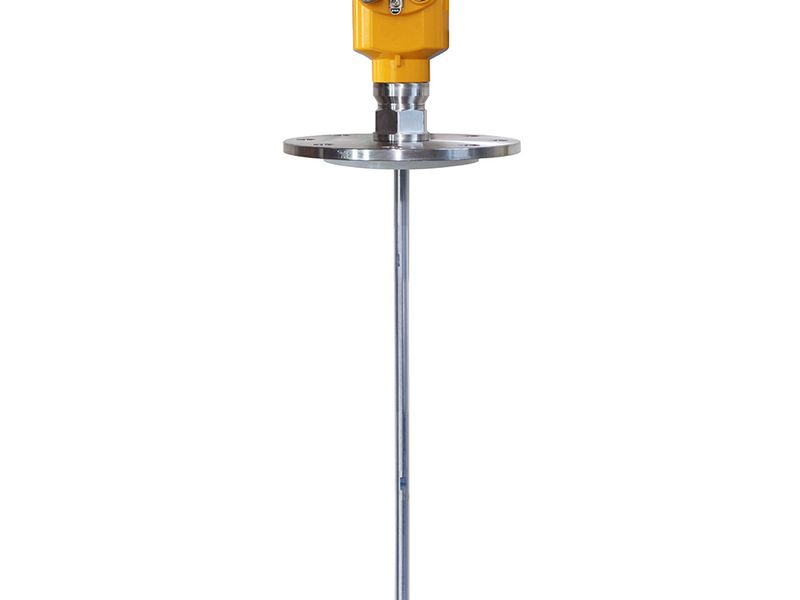
A rod probe is a rigid metal bar, typically 6–16 mm in diameter, extending straight down from the process connection. Rods cover measuring ranges from roughly 0.3 m to 6 m — small tanks, buffer drums, day tanks, skids, and separator vessels, where level matters for process control rather than inventory.
Because a rod is rigid, it cannot whip. That makes it the preferred probe for agitated tanks, surging vessels, and services with heavy condensation or splashing, where a cable would flex and a free-space radar would lose the echo. Rods handle condensation well, tolerate light coating, and — with their Dk ≥ 1.6 threshold — extend reliable measurement to a wider range of low-Dk hydrocarbons than a cable. Rods also fit bypass chambers (bridles) for stilling-well interface measurement.
The rod's constraints are length and clearance. Above ~6 m, a rod becomes unwieldy, heavy, and expensive to support, so taller vessels default to cable. A rod must be kept at least ~100 mm from the tank wall and any metallic internals to avoid false echoes. In short service, the rod delivers accuracy to ±2–3 mm, making it the probe of choice when repeatable process control matters more than raw range. See the rod-guided wave radar level transmitter for application specifics.
A coaxial probe places the measurement element inside a concentric metal tube, forming a fully shielded transmission line. The result is the strongest, cleanest signal of the three probe types: no energy radiates outward, no stray echoes arrive from the tank wall, and even extremely weak reflections from low-Dk media remain detectable down to a Dk ≥ 1.4 threshold — the lowest of any GWR probe. Coaxial probes also deliver the best accuracy of the family (±2 mm), the shortest dead zones, and the most reliable interface measurement.
The catch is the tube itself. Because the measuring element is enclosed, a coaxial probe will clog or plate over in viscous, sticky, crystalline, polymerizing, or suspended-solid service — and once the annulus fills, cleaning requires full removal and disassembly. Coaxial probes are therefore reserved for clean liquids only: light hydrocarbons, condensate, cryogenic media, and chemicals that do not foul. They are also limited to roughly 6 m in range and carry the highest cost of the three probe types. When the media is clean and the signal is weak, the coaxial-guided wave radar level transmitter is the most accurate GWR configuration available.
The table below condenses the engineering trade-offs for quick reference during probe selection.
| Probe type | Max range | Best media | Key limitations | Typical price band |
|---|---|---|---|---|
| Cable | 10–30 m (to ~40 m) | Viscous liquids; slurries; low-Dk hydrocarbons; solids in tall tanks and silos; heavy condensation | Needs bottom anchoring in agitation; whipping risk; Dk ≥ 1.9; impractical below ~1 m | Lowest |
| Rod | 0.3–6 m | Small tanks; turbulent or agitated service; condensation; interface measurement | Limited range; rigid — needs ~100 mm wall clearance; no contact with internals | Mid |
| Coaxial | 0.3–6 m | Clean liquids; lowest-Dk media; interface; cryogenic service | Clogs in viscous; crystalline; sticky; or solids-bearing media; hardest to clean | Highest |
Getting the probe into the vessel correctly matters as much as choosing the right probe type. The following rules apply across all three types.
When probe contact is impossible — highly corrosive lined tanks, media that forms hard scale, or abrasive solids — step back to a non-contact 80 GHz radar level meter and revisit the trade-off with your supplier.
GWR has no moving parts: unlike floats, displacers, and servo gauges there is nothing to jam or wear, so routine maintenance is mostly inspection.
For a broader view of where GWR sits against magnetic, ultrasonic, hydrostatic, and other principles, the level measurement technologies compared guide is a useful reference.
What accuracy can a guided wave radar level transmitter achieve? Depending on probe type and conditions, ±2 mm to ±5 mm: coaxial probes reach about ±2 mm, rod probes about ±2–3 mm, and cable probes about ±5 mm. Repeatability is typically sub-millimeter, which is why GWR suits both inventory and process-control duty.
What is the maximum measuring range of a guided wave radar level transmitter? Cable probes cover 10–30 m as standard and up to roughly 40 m in special builds, the choice for tall tanks and silos. Rod and coaxial probes are limited to about 6 m, which suits small and medium vessels.
What is the minimum dielectric constant GWR can measure? According to industry practice, the practical limits are Dk ≥ 1.4 for coaxial, Dk ≥ 1.6 for rod, and Dk ≥ 1.9 for cable probes. Below roughly Dk 1.4, guided wave radar loses the signal margin needed for reliable measurement and another technology should be considered.
Can guided wave radar measure the interface between two liquids? Yes. When two immiscible liquids with sufficient dielectric contrast are present, the pulse produces one reflection at the surface and a second at the interface, so both total level and interface position are measured in one instrument.
Can GWR handle high temperature and high pressure? Standard instruments operate from -40 °C to +200 °C at pressures up to 40 bar. High-temperature configurations with remote-mounted electronics extend to +400 °C, and high-pressure process connections extend to 160 bar or more.
Cable, rod, and coaxial probes each solve a different subset of level problems, and choosing wrong — a cable in a short agitated tank, a coaxial in a fouling service — is the most common cause of GWR field failures. Probe selection is best done against the actual vessel drawing, media properties, and process conditions, not from a datasheet alone.
WELK is a guided wave radar manufacturer with ISO 9001 factory quality systems, ATEX-capable instrument options, and application engineers who work through probe selection daily. If you are specifying a GWR transmitter, contact WELK for a quote and application engineering support with your tank dimensions, media dielectric constant, temperature, and pressure data, and we will recommend the correct probe type, length, and process connection — plus a non-contact alternative where a probe should not be installed.
Probe-based guided wave radar transmitter for narrow tanks, bypass chambers, low-dielectric liquids and selected interface applications.
Flexible cable guided wave radar for taller tanks and selected bulk solids where a rigid probe is impractical.
Rigid rod guided wave radar for clean liquids, bypass chambers and shorter process vessels with stable probe geometry.
Send drawings, dimensions, material, environment or operating conditions, and we will help confirm the right specification.
Uploaded reference files are included with the inquiry. For larger CAD packages, reply to the confirmation email or send them here:
Our team typically replies within 24 hours.