Selection Guide
Silo Level Measurement for Powders & Cement: The Complete Selection Guide
How to measure silo level for powders and cement: compare 80 GHz radar, guided wave radar, rotary paddle, and more. Get a free quote from WELK today.
How to measure silo level for powders and cement: compare 80 GHz radar, guided wave radar, rotary paddle, and more. Get a free quote from WELK today.
Silo level measurement for powders and cement is the continuous or point detection of material level inside vertical storage silos — which in cement plants, ready-mix plants, power stations, and food or plastics processing typically stand 10–40 m tall with diameters of 3–15 m. The benchmark technology for continuous duty is 80 GHz FMCW non-contact radar: its narrow 3° beam and compact antenna fit existing process nozzles, it measures over ranges up to about 120 m, and it holds repeatability of around ±2 mm even in dense dust. Point-level safeguards — rotary paddle switches, vibrating rods, and RF admittance switches — protect against overfill and empty-run. Which silo level sensor you choose depends on dust density, the powder's angle of repose and tendency to build up, its dielectric constant, and whether you need continuous inventory data or simple alarm points. This guide compares the technologies, gives a practical selection process, and answers the questions plant engineers and procurement managers most often ask.
Powder silos are usually filled pneumatically, which throws a dense dust cloud over the whole silo roof. That cloud can persist for minutes after each fill. Dust attenuates ultrasonic signals and shifts the speed of sound, which is why ultrasonic meters drift or fail on cement and fly ash duty. Microwave signals pass through dust with negligible attenuation, which is one reason 80 GHz radar has largely replaced ultrasonic on these silos.
A single top inlet fills a silo into a cone, and discharge draws a hopper-shaped surface with a steep central valley. The angle of repose varies with aeration and moisture: cement sits around 30–40°, fly ash 35–40°, and fine flours can reach 40–50° when aerated. A single point measurement directly under the roof reads the peak of the cone, not the average level, so the same "level" can represent very different tonnage depending on surface shape. This matters for inventory accounting, and it is the main reason 3D scanning radar exists.
Cement hydrates and hardens on walls wherever moist air enters; plastics and fly ash charge electrostatically and attract dust onto anything inside the silo. Build-up causes three problems: false echoes for radar (a mound on the wall is a strong reflector), fouled sensors (lenses, paddles, and probes), and flow problems such as bridging above the outlet and rat-holing. The remedy is technology that rejects wall echoes — a narrow radar beam, echo-tracking algorithms, air purges, or active-shield probes.
Powders are weak radar reflectors. Dielectric constants range from roughly 1.5 for plastic pellets and 2.5–3 for flour to 4–8 for dry cement and fly ash. The lower the value, the weaker the reflected signal. Guided wave radar routes the signal along a probe, which lets it measure very low-dielectric powders that non-contact radar would struggle with; non-contact radar needs adequate surface area and high-sensitivity processing.
Flour, sugar, starch, and many plastic powders form explosive dust-air mixtures (ATEX zones 20, 21, and 22). Sensors on those silos must carry the correct dust certification and be installed to match the zone. Cement and fly ash are not combustible in normal service, but they are abrasive and mildly corrosive, so wetted materials and seals matter for service life.
| Technology | Level type | Dust handling | Angle-of-repose / build-up behaviour | Typical accuracy | Maintenance | Relative cost |
|---|---|---|---|---|---|---|
| 80 GHz non-contact radar (FMCW) | Continuous | Excellent — microwaves pass through dust; optional air purge keeps the lens clean | Narrow 3° beam stays clear of wall build-up; echo tracking rejects false echoes from wall mounds and the filling stream | ±2 mm repeatability; roughly ±5–10 mm (about 0.1% of range) | Low — no moving parts; occasional lens wipe | Medium–high |
| Guided wave radar | Continuous | Excellent — signal is guided on the probe; unaffected by airborne dust | Measures the true surface at the probe; immune to angle of repose; but sticky build-up on the cable can create false echoes | ±10–25 mm | Low–medium — probe may need periodic cleaning; cable can whip during fast filling | Medium (cable length adds cost) |
| Rotary paddle | Point | Adequate — sealed shaft; heavy dust can wear the shaft seal | Build-up on the paddle causes false high signals; a material bridge can leave the paddle spinning in a void | Switch repeatability ±25–50 mm | Medium–high — moving parts; seals; torque settings to check | Low |
| Vibrating rod | Point | Excellent — no moving parts to clog or seal | Rod self-cleans by vibration; coating changes resonance; so choose units with coating detection | Switch repeatability ±10–20 mm | Low — no wearing parts; occasional cleaning of heavy coating | Low–medium |
| Capacitive / RF admittance | Point or continuous | Good — no optics or moving parts | RF admittance with an active shield ignores probe coating; critical for sticky powders; plain capacitance drifts with build-up and changing dielectric | Point ±10 mm; continuous 1–3% of range | Low–medium — probe cleaning on sticky duties | Low–medium |
| Plumb bob (drop probe) | Continuous | Good — mechanical contact; nothing to fog | Measures the true surface on contact; can be trapped by build-up or fall into a bridging void | ±25–50 mm | High — cable; drive motor; and weight need regular inspection | Medium buy-in; high lifetime maintenance |
The default choice for modern silo duty. Frequency-modulated continuous wave (FMCW) radar transmits a swept microwave signal and derives level from the frequency shift of the surface echo. At 80 GHz, the beam is only about 3°, so it stays well clear of wall build-up, and the antenna is small enough to fit through a typical 80–150 mm nozzle. Long-range versions measure to about 120 m with ±2 mm repeatability — ample headroom for a 40 m silo with a fill cone.
For powders, the practical extras are what separate a good installation from a troublesome one: air purge keeps the lens clear on dusty or condensing duty, and echo-tracking firmware locks onto the true surface instead of the falling fill stream or a wall mound. WELK builds a purpose-made cement silo radar level meter for exactly this service, an 80 GHz radar level meter with air purge for heavy dust and condensation, and a long-range silo radar where silos exceed normal range limits.
Guided wave radar (GWR) sends the signal down a cable or rod that contacts the material. Because the signal is guided, it is unaffected by airborne dust, foam, or angle of repose, and it can measure powders with a dielectric constant below 2 that would give a non-contact radar almost nothing to reflect. GWR shines in short bins, day silos, hoppers, and any vessel where the antenna has little free space or a very small nozzle.
Its limits are mechanical. A cable for a 30 m silo is heavy, needs a top anchor or weight, and can whip and snap during fast pneumatic filling. Sticky powders build up on the cable and generate false echoes. Plan GWR for silos up to roughly 15–20 m, and give the probe a regular cleaning schedule.
A single-point radar measures one spot; a 3D scanner maps the whole surface. WELK's 3D silo inventory scanner uses multiple millimetre-wave transceivers in one roof-mounted housing to plot the material surface across the full silo cross-section, then converts that map to volume using the vessel's geometry. This solves the angle-of-repose problem directly: you get average level and true tonnage even when the surface is a lopsided cone or an empty hopper valley.
It is the right tool when inventory accuracy is a financial number — cement, fly ash, and raw meal stock reconciliation against weighbridges, invoicing, or dispatch planning. Volume accuracy is typically within a few percent, which is far better than a single point reading can achieve on an irregular surface. Expect a higher upfront price than a single radar, justified by the inventory data it returns.
The plumb bob, also called a drop hammer, weighted tape, or yo-yo, lowers a weight until it touches the material surface, detects the slack, and measures the cable payout. It is the oldest continuous method and still the most robust in one sense: it is a contact measurement, immune to dust, dielectric constant, and foam, and it reads the true surface at the drop point.
Its weakness is speed and moving parts. A measurement cycle takes minutes, so it is not continuous in real time; the cable and drive need regular inspection, and in a silo with heavy build-up the weight can land on a mound or drop into a bridging void. In practice the plumb bob survives as a periodic cross-check on cement and aggregate silos, or as the sole measurement where budget rules out radar. Many plants now run continuous radar and verify it monthly with a plumb bob.
The rotary paddle is the low-cost workhorse of overfill and empty-run protection. A motor turns a paddle; material stops it; a torque clutch trips the switch. It is simple, familiar to every maintenance crew, and cheap. On powders, choose a low-torque unit so light material reliably stalls the paddle, and protect the shaft seal from dust ingress.
The trade-offs are mechanical. Paddle build-up can hold the paddle and cause a false high signal, a bridge can leave the paddle spinning in a void, and seals and bearings wear. It is an excellent high-level or low-level alarm where the consequences of a missed signal are modest. WELK's rotary paddle level switch is a common fit on cement and fly ash silos.
A vibrating rod drives a probe at its resonance frequency and detects contact because material damps the vibration. There are no seals to wear and no visible moving parts, so it shrugs off dusty powder where a paddle would grind. The rod's vibration also sheds powder, which keeps it cleaner in sticky service.
The one trap is coating: if material builds up on the rod, the resonance shifts and the switch can false-trip. Buy a unit with coating detection that distinguishes "covered" from "coated," and you have a low-maintenance point switch for powders, granulates, and low-density materials. WELK offers the vibrating rod level switch for bulk solids as well as a two-prong tuning fork level switch for powders where the fork design suits the application.
Capacitive switches sense the change in capacitance as powder covers the probe. Plain capacitance drifts when build-up coats the probe and when the powder's dielectric changes, which makes it unreliable on sticky or variable product. RF admittance technology adds an active shield that drives the probe coating to the same potential as the sensing element, so build-up on the probe is ignored — a decisive advantage for cement, fly ash, and plastics. RF admittance units do point and continuous duty, while a non-contact capacitive sensor can handle very light powders without touching the product. For a point alarm that will not false-trip on coating, WELK's RF admittance level switch is the strongest pick in this family.
Decide first whether you need a number or an alarm. If you need inventory, tonnage, production feed, or batch accounting, you need continuous measurement: 80 GHz radar for most silos, 3D scanning radar where surface shape distorts single-point readings, guided wave radar for short silos and low-dielectric powders. If you only need overfill protection and a low-level interlock, point switches are cheaper and simpler — a high-level rotary paddle or vibrating rod plus a low-level vibrating rod covers most plants.
Work through the physical conditions: silo height and nozzle size (80 GHz radar fits small nozzles and reaches 120 m), dielectric constant (very low powders favor GWR or high-sensitivity radar), dust and build-up (air purge, narrow beam, echo tracking, or RF admittance), and hazardous area (dust zone certification must match). A 40 m cement silo with a 100 mm nozzle is a textbook 80 GHz radar application; a 6 m day bin holding plastic pellets is a textbook guided wave radar application.
Radar carries the highest upfront price but the lowest maintenance and the best inventory value; a plumb bob is cheap to buy but expensive to keep; point switches are inexpensive and easy to maintain but only give alarms. For a single silo needing only high/low alarms, a rotary paddle or vibrating rod pair is the economical answer. For a battery of cement silos feeding dispatch, the inventory data from radar — or a 3D scanner on the largest silos — pays for the hardware in avoided overfills, demurrage, and reconciliation write-offs.
Most retrofits replace an aging plumb bob, ultrasonic, or capacitance probe through an existing roof nozzle. An 80 GHz radar fits the same nozzle without structural work, and an air purge handles the dust the old technology could not. Where wall build-up has always corrupted readings, switch to a narrow-beam radar with echo tracking, or add a 3D scanner to see the true surface. WELK publishes a dedicated reference page for silo and powder level measurement with the application guidance plant engineers need before specifying.
For continuous level, 80 GHz non-contact radar is the industry standard on cement and fly ash silos: it handles the dust, fits existing nozzles, and gives ±2 mm repeatability over the full silo height. Add a high-level and low-level point switch (rotary paddle or vibrating rod) for independent overfill protection.
Yes. 80 GHz FMCW radar with high-sensitivity settings and echo tracking can measure powders down to a dielectric of about 1.5 if the surface area and antenna are sized correctly. For the very lowest-dielectric materials, guided wave radar is the safer choice because the signal is routed along the probe instead of relying on surface reflection.
Choose non-contact 80 GHz radar for tall silos (10–40 m), dusty atmospheres, and wall build-up, where the narrow beam and echo tracking are decisive. Choose guided wave radar for short silos and hoppers, very low-dielectric powders, or where there is no clear free space above the material.
For lowest cost and a familiar device, rotary paddle. For lower maintenance and better reliability in dusty powders, vibrating rod: no seals, no visible moving parts, and self-cleaning vibration. If the product is sticky, make sure the vibrating rod has coating detection.
A continuous radar reading ±10 mm on a 30 m silo is better than 0.05% of range, which is ample for most inventory and reconciliation work. When the surface is an irregular cone or valley, use a 3D scanner for volume accuracy within a few percent, and reconcile against weighbridge data on a regular schedule.
Choosing the wrong silo level sensor costs more in downtime and inventory errors than the sensor itself. WELK manufactures the full range — cement silo radar level meters, long-range and air-purge 80 GHz radars, 3D silo inventory scanners, and rotary paddle, vibrating rod, and RF admittance switches — with application support to help you match the technology to your silo geometry, dust conditions, and budget. Contact WELK for a free quote or a consultation, and get a recommendation backed by real silo installations rather than a catalogue.
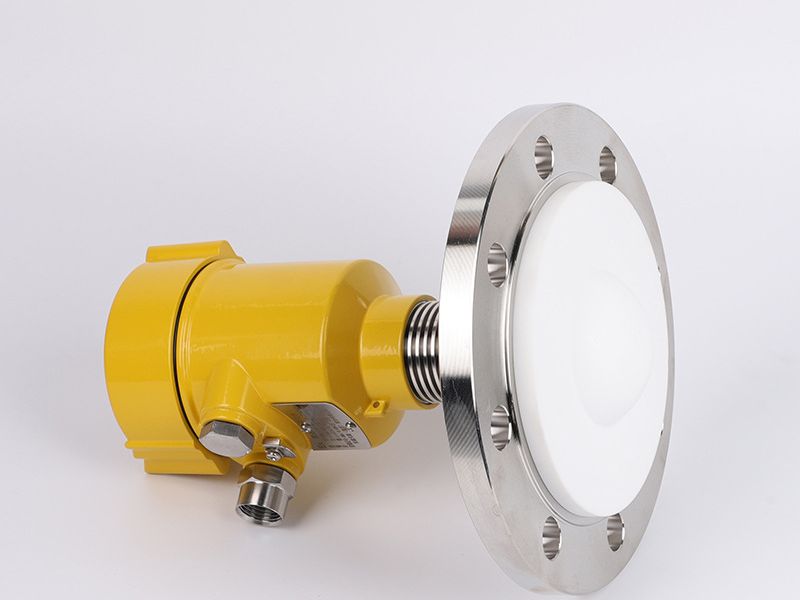
Radar level meter configured for cement, fly ash, lime and mineral powder silos with dust, filling stream and aiming review.
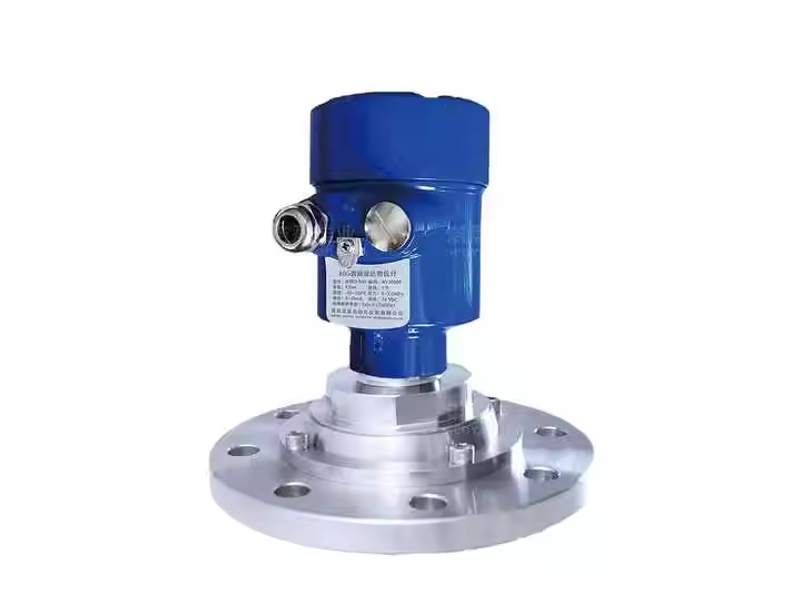
Long-range radar level meter for powders, pellets, cement, fly ash and bulk solids storage where dust and uneven surfaces must be reviewed.
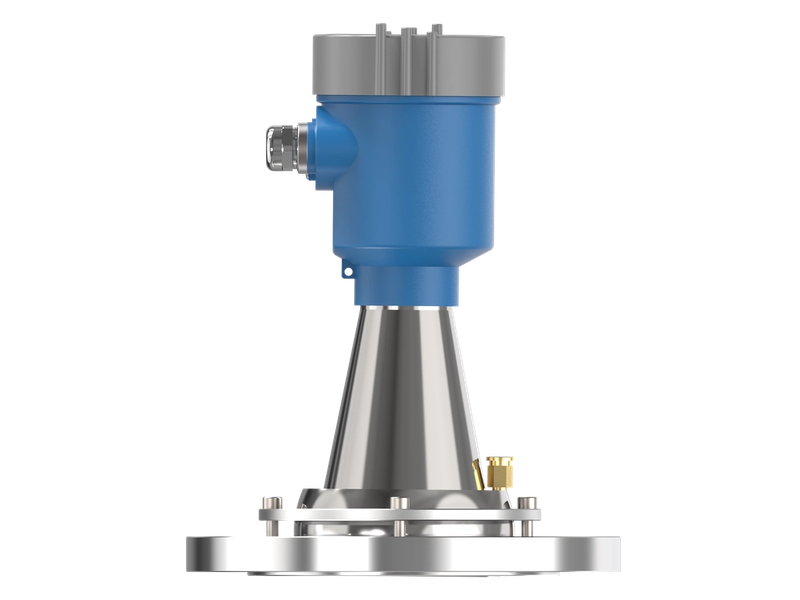
80 GHz radar package with purge connection for dusty silos and applications where antenna buildup can weaken the echo.
Send drawings, dimensions, material, environment or operating conditions, and we will help confirm the right specification.
Uploaded reference files are included with the inquiry. For larger CAD packages, reply to the confirmation email or send them here:
Our team typically replies within 24 hours.